The Mobile Takeaway — Thursday, August 20, 2026
|
The Mobile Takeaway
For people who ship apps
|
Thursday, August 20, 2026
|
Apple is replacing its per-install fee in the EU with a 5% commission and restructuring tracking rules to allow bundled data-use requests. This issue also covers how moving a paywall before the sign-up screen increased trial activations by 190% and how one startup reached $10 million ARR without testing paywalls or sending lifecycle emails.
Platform
From new hardware search tools to the ongoing legal battles over AI trade secrets.
- Pixel 11 introduces unified ‘Pixel search’ companion 9to5Google
Google is launching a dedicated search tool designed to help users find personal information across their devices faster. - Astropad Workbench 1.3 improves remote Mac streaming 9to5Mac
The update adds tools for accessing unattended Macs and improves performance for developers using remote desktop setups. - Apple fights OpenAI bid to dismiss trade secret lawsuit 9to5Mac
Apple reaffirmed claims that former employees stole proprietary technology for OpenAI, a case that could impact how AI talent moves between companies. - Susan Kare revisits original Mac icon design 9to5Mac
The designer of the Mac's visual language shared the history of her graphics at Startup School 2026.
Monetization
Apple restructures its EU fees and tracking rules while high-growth startups prove you can skip the playbook.
- Apple drops per-install fees in revised EU rules Mobile Dev Memo
Starting October 1, the €0.50 Core Technology Fee is replaced by a 5% commission for alternative distribution to resolve compliance disputes. - Apple forced to restructure ATT following antitrust probe Mobile Dev Memo
A German settlement mandates neutral consent prompts and allows developers to bundle data-use requests, limiting Apple's ability to favor its own services. - Apple launches unified campaign management API Mobile Dev Memo
The new API unifies ads across the App Store and Maps, signaling a push to scale Apple's advertising business across more digital surfaces. - 57% of global workers would accept stablecoin payouts Stripe Blog
Independent workers in emerging markets are seeking stablecoins to hedge against inflation and avoid slow cross-border settlement fees.
 |
▶ YouTube App Masters
We’ve Tested 100s of Paywalls. Here’s What Actually Converts.
|
Key takeaway: Steve P. Young increased trial activations by 190% for a fitness app by moving the paywall to appear before the account sign-up screen.
• 94% of users saw the paywall after the sequence was flipped, compared to just 40% when the sign-up screen came first.
• 56% increase in trial activations resulted from adding a three-screen sequence that explicitly explains the trial timeline and reminders.
• 8 paywall views is the approximate threshold where developers start to see diminishing returns on frequency.
• 65% increase in sales occurred when a geometry app replaced a short paywall with a long-form scrolling version containing testimonials and comparison tables.
• $10,000 monthly revenue was achieved by switching to a "hard paywall" without an exit button, up from $2,000 with a soft paywall.
• "Continue" generally performs better as a CTA on iOS, while "Start Free Trial" performs better on Android.
Why it matters: Most users who subscribe do so on Day 0, making the onboarding paywall the most critical revenue lever for any app.
Worth it? Yes, it is a dense list of tactical wins for anyone managing subscription revenue.
 |
🎙 Podcast Sub Club
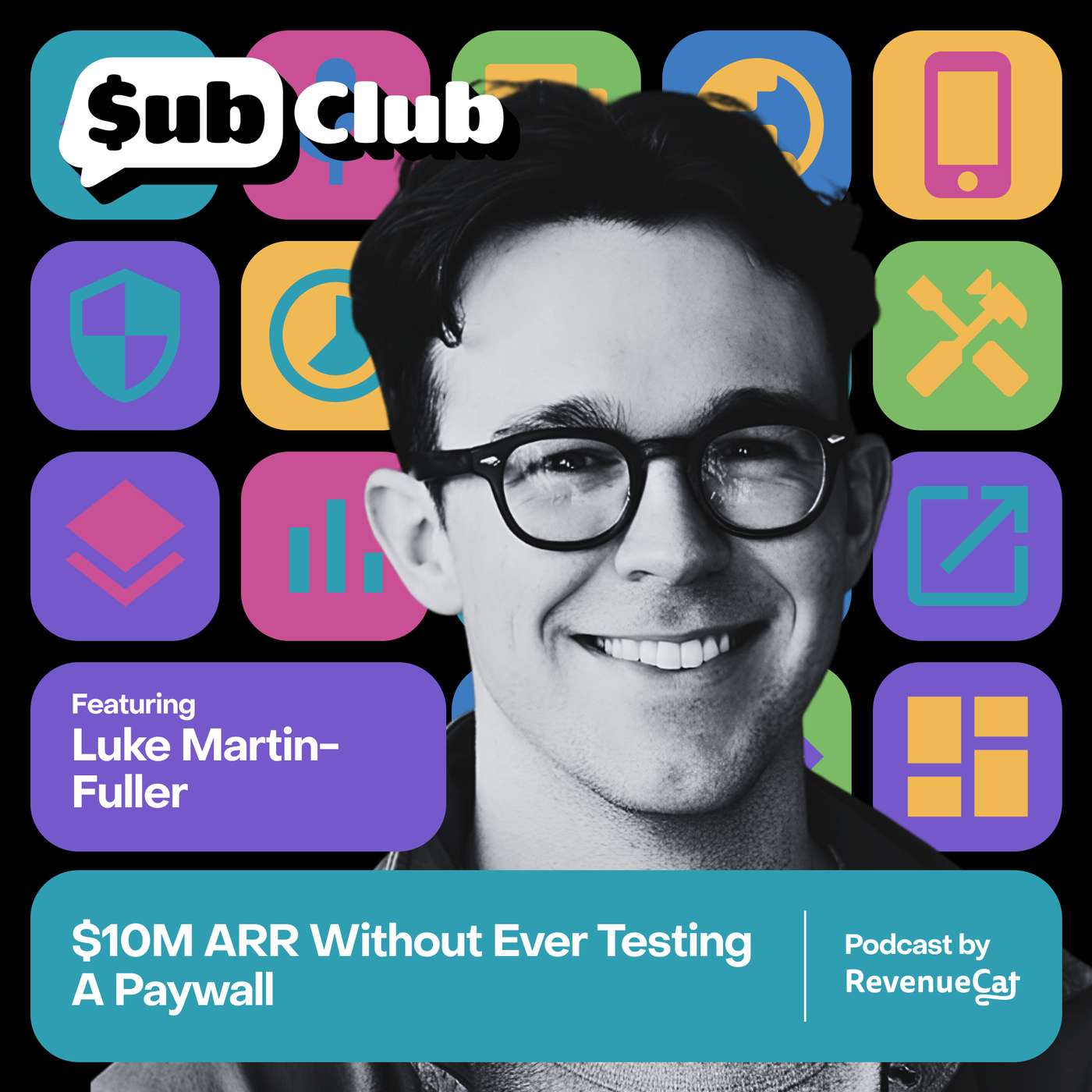
$10M ARR Without Ever Testing A Paywall — Luke Martin-Fuller, Visible
|
Key takeaway: Visible reached $10 million ARR in two years while completely ignoring lifecycle emails, SEO, and paywall A/B testing.
• $0 profit is made on the $80 hardware component to keep the entry barrier low for the $14.99/mo subscription.
• 10 days is the median time from landing on the website to purchase, as users conduct extensive research on chronic illness data before committing.
• "We’ve never sent a lifecycle email," says co-founder Luke Martin-Fuller, highlighting a focus on product value over marketing hacks.
• 100% of paid acquisition comes from Meta using user-generated content from community members who are paid cash for their videos.
• HSA and FSA payments are supported by selling via a web funnel, allowing the company to avoid the 30% App Store commission on those transactions.
• 50,000 users were acquired via word-of-mouth for the free app before the company ever launched its hardware or subscription.
Why it matters: It proves that a deep focus on a specific community and scientific validation can outweigh traditional growth optimization in the early stages.
Worth it? Yes, it’s a rare look at a high-growth company that succeeded by breaking standard "best practices."

The next issue, in your inbox.
Apple and Google updates, pricing and paywalls, and the numbers behind app businesses. Get the brief every weekday morning.
Free. Every weekday. Unsubscribe anytime.