macOS 27 will drop Rosetta support · Weekly subscriber churn hits 65%
|
The Mobile Takeaway
For people who ship apps
|
Wednesday, September 2, 2026
|
Apple silicon Macs will stop running Intel-only apps when macOS 27 arrives, and Google Play now requires developers to disclose AI-generated store assets. Data shows up to 65% of weekly subscribers churn at the first renewal, leaving a five-day window to demonstrate value before users cancel.
Platform
Apple and Google refresh their development environments while the EU begins enforcing AI disclosure rules.- macOS 27 will be the final release to support Rosetta Apple Developer News
Intel-only apps will no longer run on Apple silicon Macs after this update, and users on macOS 26.4 will begin seeing update notifications. - Google Play now requires developers to declare AI-generated assets Phiture
Following the 2nd August 2026 EU AI Act deadline, failing to disclose synthetic text or visuals in store listings may result in penalties from automated detection tools. - Android Studio Quail 4 is stable with local Gemma 4 integration Android Developers Blog
The final release of the Quail cycle includes 23 "Android skills" to guide AI agents through platform-specific migrations and complex configurations. - Swiggy moved Instamart and Dineout to native Swift and SwiftUI Apple Developer News
The transition from hybrid to native tools resolved issues with high page load times and app hangs while allowing the team to use Core Animation. - Perplexity Mac app now processes sensitive data locally AppleInsider
A new "hybrid compute" feature automatically detects personal information like phone numbers and routes those tasks to on-device AI. - John Ternus is receiving a $58 million pay package as Apple CEO 9to5Mac
Regulatory filings also show Tim Cook will receive $47 million as executive chairman, while Luca Maestri has left his Corporate Services position. - September 2026 Android Drop adds Find Hub and Motion Assist 9to5Google
The latest feature update for the Android ecosystem includes a "Remembered" list and new integrations for Google Messages. - Anthropic upgraded Claude with the Fable 5.1 model 9to5Mac
The update follows the June release of the Mythos-class Fable 5 model as the company continues its three-month enhancement cycle.
Monetization
Data from the field shows the reality of the first subscription renewal and how to pick the right ASO tools.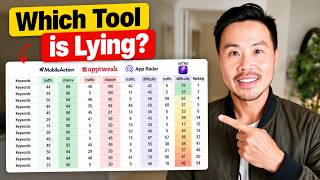 |
▶ YouTube App Masters
Best ASO Tools: Which One Has the Most Accurate Data?
|
Key takeaway: Steve P. Young found that AppTweak provides the most accurate traffic and chance data for iOS ASO compared to actual RevenueCat download stats.
• 30 to 40 is the target search traffic score for keywords that balance volume with manageable competition.
• 40 is the maximum difficulty score developers should target when aiming for a #1 ranking in the App Title.
• 60 or higher chance score is required to ensure a keyword is worth the implementation effort.
• Astro is recommended as a budget-friendly option for indie developers to track daily ranking updates.
• ASO Mobile is the preferred tool for mining competitor keywords to avoid manual brainstorming.
Why it matters: Using actual revenue data to verify ASO tools helps developers stop guessing which proprietary scores correlate with installs.
Worth it? Yes, the specific numerical benchmarks for traffic and difficulty are immediately actionable.
themobiletakeaway.com
- 42% to 65% of weekly subscribers churn at the first renewal RevenueCat Blog
Data suggests developers have a narrow five-day window to drive time-to-value before weekly users start worrying about the next charge.
 |
▶ YouTube RevenueCat (YouTube)
Building cross-platform: Kotlin Multiplatform [Shipaton 26]
|
Key takeaway: JetBrains and Google are collaborating on Compose Multiplatform to ensure API parity and performance across iOS and Android.
• 4,300+ multiplatform libraries are now available on klibs.io, including the RevenueCat SDK.
• Liquid Glass effects and native text field behaviors allow CMP apps to mimic platform-specific iOS UI expectations.
• Swift Export enables shared Kotlin code to be called from Swift using an idiomatic API layer.
• $15,000 is the top prize for the Ship Kotlin Everywhere category in the current Shipaton challenge.
• KMP is now used in production by major apps including Netflix, Duolingo, and the iOS version of Google Docs.
Why it matters: KMP has moved from an experimental choice to a stable framework for sharing business logic without losing native UI feel.
Worth it? Yes, if you are considering a cross-platform move but want to avoid the bridge performance issues of React Native.
themobiletakeaway.com
- Amazon allegedly overcharged advertisers $20 billion Mobile Dev Memo
An FTC lawsuit claims the company used a soft-floor reserve to manipulate auction mechanics and hide surcharges that reduced advertiser returns.
Business
New tools for agent-led testing and a low-cost AI model from China shake up the developer stack. |
▶ YouTube Fireship
The mystery is solved... and the answer is 40x cheaper than Claude
|
Key takeaway: Zhipu AI's GLM-5.3-Flash served 42 trillion tokens in six days during a stealth launch as Ox Alpha on OpenRouter.
• $0.15 per million input tokens makes it roughly 40x cheaper than Claude for high-volume tasks.
• 1 million token context window supports multi-modal inputs including text, images, and video.
• 100,000 Chinese-made chips handled the entire stealth run, demonstrating a shift away from Nvidia hardware.
• 58.4% resolved rate on the Deep SWE benchmark was the actual performance, correcting viral rumors of 80%.
• MIT license allows developers to access model weights on Hugging Face for local or custom deployments.
Why it matters: It provides a frontier-grade coding model at a fraction of the cost of US-based providers, ideal for automated refactoring or heavy vision processing.
Worth it? Yes, it's a rare look at how Chinese labs are competing on price and hardware independence.
themobiletakeaway.com
- testflight.computer allows sharing iOS builds via ad-hoc distribution Jake Mor
Jake Mor’s new tool, testflight.computer, offers a way to share iOS builds with AI agents or teams without the overhead of official TestFlight distribution. By using ad-hoc builds and registering device IDs, developers can bypass Apple's review process for internal testing.
The implementation uses websockets to stream download progress from the server, solving the silent install issue in Safari. For teams using AI agents in CI/CD pipelines, this provides the preview links that have long been standard for web development but missing for native mobile. Jake Mor ✓@jakemor
𝕏 Introducing https://t.co/jNcmWOwRcI - testflight built for agents to easily share iOS apps with you & your team. little known trick, you can host signed builds and install them from safari if you cut an adhoc distribution build with your device registered in your ASC account. [1] i also added screenshots, past builds, what's new & more - it's easy to confuse what you're testing while working on 100 things → its totally free → no sign up required → works with gh actions that last one is neat - work in any linux sandbox or devbox, build runs in CI on mac runners, agent sends you the link or review in PRs 🤝 ios finally gets preview links just tell your agent "setup https://t.co/jNcmWOwRcI" -- [1] By default you hit download and iOS asks to install it via system message. you get no confirmation when its complete, pretty shitty ux. i wanted some niceties like download progress / opening the app from safari (ios doesnt tell you when its done) so I watch the packets leaving the server to estimate download progress & stream this back to the site over websockets.

The next issue, in your inbox.
Apple and Google updates, pricing and paywalls, and the numbers behind app businesses. Get the brief every weekday morning.
Free. Every weekday. Unsubscribe anytime.