iPhone Duo design guides released · Siri AI launches with usage caps
|
The Mobile Takeaway
For people who ship apps
|
Thursday, September 10, 2026
|
Apple released design guides for the foldable iPhone Duo to help developers optimize app layouts for the new form factor.
The device reportedly swaps Face ID for Touch ID across both open and closed states. Siri AI arrives this month with daily usage limits and future fees for all supported devices.
Platform
| • | Apple releases developer resources for iPhone Duo foldable ahead of October 9to5Mac New technical documentation and design guides help developers optimize app layouts for the foldable form factor before the device launches next month. |
| • | Foldable iPhone Duo reportedly swaps Face ID for Touch ID AppleInsider Apple’s first foldable will use Touch ID and Apple Watch authentication to provide biometric security across both open and closed device states. |
| • | Siri AI launches September 14 with usage caps and future fees AppleInsider Apple Intelligence arrives in beta with the iOS 27 release, introducing daily usage limits and eventual paid access for all supported devices. |
Monetization
 | 🎙 Podcast · 32 min Mobile Dev Memo Podcast The CAPI revolution and the engineering cost of ad attribution |
Season 7, Episode 32: The CAPI revolution
Key takeaway: The Conversions API (CAPI) has moved ad tracking from the browser to server-to-server integrations, allowing Meta and others to bypass Apple’s privacy restrictions while creating a high engineering barrier for smaller competitors.
• Meta’s recovery from App Tracking Transparency (ATT) was driven by CAPI, which transmits conversion events directly between servers, bypassing Safari’s cookie caps and iOS-level tracking blocks.
• Smaller ad platforms face "Small Platform Syndrome," where advertisers refuse the "cumbersome" engineering work required for CAPI integration until the platform proves its ROI, which it cannot do without the data.
• CAPI matching relies on deterministic identifiers including email addresses, phone numbers, and IP addresses to achieve high fidelity without relying on the IDFA.
• Apple’s potential "nuclear option" to kill fingerprinting—making iCloud+ Private Relay the default for all iOS traffic—remains unused due to high operating costs and antitrust risks.
• European regulators have fined Apple €249 million (France and Italy) for imposing asymmetric privacy rules that favor its own services over third-party advertisers.
• A wave of non-traditional players including Netflix, United Airlines, and OpenAI are launching their own ad networks and CAPIs to monetize first-party purchase and intent data.
• Advertisers risk "data leakage" when using CAPI, as it informs the ad network about every purchase, even those the network did not generate.
Why it matters: For app founders, the "pixel" era is over; scaling ad spend now requires dedicated engineering resources to integrate server-side tracking, favoring established giants over experimental new channels.
Worth it: Yes, it explains why Meta is working again and why your engineering team is suddenly being asked to build ad-tech integrations.
themobiletakeaway.com
| • | RevenueCat adds AI design and Firebase support to web funnels RevenueCat Blog A new AI editor generates conversion screens from prompts, while Firebase support and custom components help founders build web-to-app acquisition journeys without custom stacks. |
Business
 | ▶ YouTube · 18 min Starter Story How I Built This $160K/Month Gym App |
Key takeaway: Symmetry scaled to $160,324 in monthly revenue by treating content creation like a high-volume factory and using data-driven A/B testing to identify non-obvious retention levers.
• The app manages 566 active social media accounts, posting nearly 80,000 videos in the last year to generate 762 million views.
• A specific "Notis" video format uses a dramatic hook, such as a breakup text on an iPhone lock screen, followed immediately by an app notification to "stop crying and hit legs."
• Symmetry distributes nearly 50% of total app revenue back to its creators to incentivize high-volume content production and long-term retention of talent.
• Founder Mauro Botanes identifies "Activation" (tracking the first workout) as the critical "Aha!" moment that predicts long-term retention for the business.
• An A/B test adding a "Commit with Signature" screen at the end of onboarding increased user retention by 3.73% with a 99.9% chance to win.
• The team uses Claude.ai with Model Context Protocol (MCP) to connect the LLM directly to PostHog and RevenueCat data for faster analysis.
• Superwall is used for paywall management, allowing the team to test pricing and designs without waiting for App Store review cycles.
• A major redesign of the main training page was scrapped after A/B testing showed a 0% impact on metrics, despite the founders preferring the new look.
Why it matters: It demonstrates how a high-volume social acquisition strategy paired with aggressive A/B testing can overcome the plateau of founder intuition.
Worth it: Yes, for the specific UGC "Notis" tactic and the data on the signature screen experiment.
themobiletakeaway.com
| • | Apple’s EU Ads Repository @david_attisaas FYI Apple maintains a searchable database of ads served in the EU, allowing founders to audit competitor creative and messaging strategies.
did you know that the EU overlords force apple to maintain a library of apple ads for advertisers in the EU countries?
https://t.co/3maAceJdGR
same as meta ads library but for ads running on apple
|


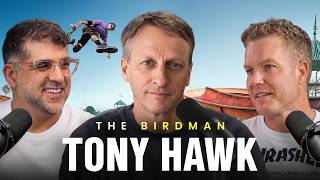 | ▶ YouTube · 71 min My First Million Tony Hawk inspiring us for 72 minutes straight |
Key takeaway: Tony Hawk turned down a $500,000 lump sum for his first video game royalties, later receiving a single $4.5 million check as the series dominated sales charts.
• In 1999, Activision offered a $500,000 buyout of all future royalties before the first Tony Hawk’s Pro Skater launched; Hawk refused the offer to "let it ride."
• By 2002, the first three titles in the series remained in the top 10 sales charts simultaneously with the fourth release, resulting in a single-period royalty check of $4.5 million.
• Hawk demanded "final approval" rights over game content to ensure authenticity, distributing beta discs to pro peers for honest feedback.
• During a 1991 industry slump, Hawk’s monthly sponsor income dropped from $1,500 to $300, forcing him to pivot to video editing for tech companies at "a tenth of the cost" of an agency.
• His foundation, The Skatepark Project, uses a "concrete proof" model, funding nearly 1,000 physical builds to date rather than abstract research.
• Early foundation grants of $5,000–$10,000 were designed as "validation" tools to help local organizers secure formal approval from city councils.
• Hawk’s angel investment strategy focuses on "passion" over capital, leading to early stakes in Nest, Blue Bottle Coffee, and DocuSign.
Why it matters: Hawk’s trajectory illustrates the massive upside of retaining royalties over short-term cash and the business value of maintaining strict product integrity when licensing a brand.
Worth it: Yes, the $500k vs. $4.5M decision is a classic case study in betting on your own product's long-term value.
themobiletakeaway.com

The next issue, in your inbox.
Apple and Google updates, pricing and paywalls, and the numbers behind app businesses. Get the brief every weekday morning.
Free. Every weekday. Unsubscribe anytime.