|
The Mobile Takeaway
For people who ship apps
|
Monday, September 21, 2026
|
Bending Spoons achieves four million dollars in revenue per employee by using a centralized tech stack to manage apps or by cutting Evernote staff from 350 to 20.
A booking widget for trades reached 85,000 AUD in monthly recurring revenue by selling the product through physical door-to-door demonstrations.
Platform
| • | Valve releases open-source Lepton tool to port Android games to Steam 9to5Google
Valve's open-source resource enables developers to bring Android-native games to Linux and Steam, creating a new distribution path for mobile titles on desktop handhelds. |
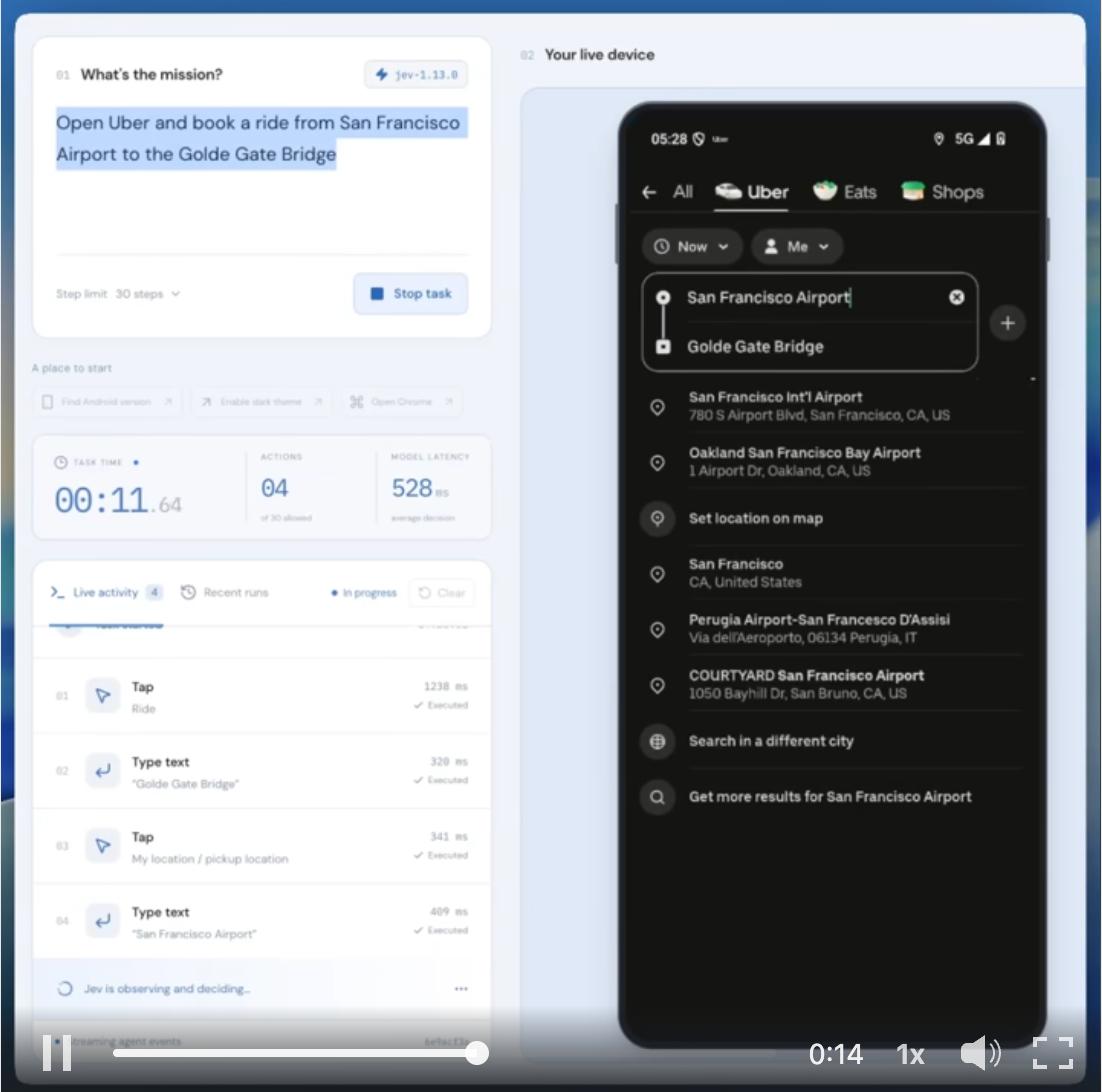
| • | Fast Mobile Automation lnkd.in Niels Schmidt’s mobile-jev uses TypeSafe’s "System One" model for fast, cheap mobile automation. Unlike text-heavy LLMs, Jev returns structured decisions by reading UI state directly, executing actions on real hardware. Jev might be a great solution for automating mobile app testing, content creation and posting to different platforms, competitor analysis etc. It makes decisions in under half a second. |
| • | Google tests paying publishers for content used in AI results 9to5Google
The AI contribution pilot explores direct payments to publishers when their content informs AI Overviews, potentially establishing a new revenue model for content-driven mobile businesses. |
| • | Apple executives detail design philosophy and notebook inspiration for iPhone Duo foldable AppleInsider
Apple executives discuss building the upcoming foldable from scratch, positioning the new device class as a major design shift inspired by the utility of physical paper notebooks. |
Business
 | ▶ YouTube · 121 min David Senra Inside Bending Spoons: Finding Talent, Leveraging AI & Driving Operational Excellence | Luca Ferrari |
Key takeaway: Bending Spoons achieves a 3 billion dollar run-rate and 4 million dollar revenue per employee by centralizing technical operations and applying a proprietary operating system of 50 internal tools to acquired apps like Evernote and Vimeo.
• The company maintains a 54 to 55 percent adjusted operating income margin by aggressively reducing headcount; Evernote staff was cut from 350 to 20 while tripling the pace of feature launches.
• Hiring is centralized under a 50-person team of engineers rather than HR, processing 800,000 applications to hire fewer than 300 people using mental capacity tests and behavioral signals.
• Luca Ferrari rejects the data-driven label in favor of being logic-driven, arguing that long-term investments like top-tier salaries change talent quality in ways short-term experiments cannot measure.
• Internal job titles are eliminated to prevent politically charged discussions; an algorithm assigns functional labels for reporting, but employees choose their own external titles.
• The proprietary Operating System includes Old Spooner, an AI agent with employee-level access that analyzes data and proposes code fixes, and Diagram, an AI tool for generating UI mockups.
• Acquisition targets must have a powerful brand and predictable subscription revenue; Bending Spoons often bids 50 percent higher than competitors to win deals quickly and avoid haggling.
• Team members are intentionally given more work than they can finish to force surgical prioritization and prevent the efficiency drain of unnecessary tasks.
Why it matters: This model demonstrates how extreme operational efficiency and a centralized tech stack can turn stagnant legacy apps into high-margin cash engines.
Worth it: Yes, it provides a rare look at the unit economics and management tactics of the most successful app consolidator in the market.
themobiletakeaway.com
 | ▶ YouTube · 14 min Starter Story This Simple Widget Makes $50K/Month |
Key takeaway: Avenue reached 57,000 USD in monthly recurring revenue within 14 months by building a booking widget specifically for blue-collar trades and selling it via door-to-door iPad demonstrations.
• The business grew from 597 AUD MRR in August 2025 to 63,108 AUD by August 2026, eventually reaching a current MRR of 85,000 AUD with 258 active subscriptions.
• The product is a website embed that guides customers through service inquiries and integrates directly with Google Reservations on business profiles.
• Founder Tom Holliday funded the initial development using revenue from his existing digital marketing agency, hiring a full team before the product had any revenue.
• The primary growth lever was physical door-to-door sales, visiting mechanics and electricians to demonstrate the widget's value proposition in person.
• The team switched from demoing on iPhones to iPads because prospects often mistook the widget for a standalone app rather than a website integration.
• Operating costs are led by Twilio at 4,000 per month for SMS functionality and Claude AI at 800 per month for operations.
• The founder recommends securing a financial commitment from a prospect before building a product to ensure the problem-solution fit is validated.
Why it matters: It demonstrates that niche-specific B2B widgets can scale rapidly through high-touch sales tactics and that physical presence still provides a competitive advantage over digital-only marketing for certain industries.
Worth it: Yes, for the specific breakdown of scaling a service-adjacent SaaS and the unconventional team-first hiring approach.
themobiletakeaway.com