Low usage drives 40% of churn · iPhone 18 Pro restarts
|
The Mobile Takeaway
For people who ship apps
|
Tuesday, September 22, 2026
|
RevenueCat found that low usage frequency drives up to 40% of cancellations, requiring habit-loop improvements rather than price discounts.
Whatnot reached $1 billion in GMV by using scraping algorithms to simulate liquidity and pivoting to a live-streaming collectible marketplace.
Platform
| • | Neural Engine timeouts and kernel panics affect new Apple hardware AppleInsider Apple Watch Series 12 and iPhone 18 Pro owners report frequent restarts and kernel panics triggered while using Siri, Maps, and the App Store. |
| • | Google Opens Car-Based Game Publishing to All Android Developers Android Developers Blog Google has opened Google Play production tracks for car-based games, allowing developers to target Android Auto and Automotive OS users during vehicle downtime. |
| • | Apple stock hits record $338.98 following Siri AI and hardware success AppleInsider Shares closed at a record high as investors react to Siri AI improvements and the iPhone Duo launch, signaling market confidence following John Ternus’s transition to CEO. |
Monetization
| • | RevenueCat data shows usage frequency drives 26% to 40% of churn RevenueCat Blog RevenueCat reports that insufficient usage drives up to 40% of cancellations, requiring habit-loop improvements rather than the common reflex of offering price discounts. |
| • | Retail giants block third-party AI agents to protect advertising revenue Mobile Dev Memo Amazon and Walmart are blocking independent shopping agents to protect their advertising businesses, forcing future AI commerce into closed, proprietary retail ecosystems. |
Business
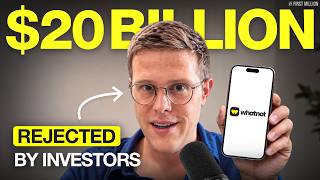 | ▶ YouTube · 60 min My First Million How I launched a marketplace with no buyers and no outside sellers |
Key takeaway: Whatnot scaled from $25,000 to $1 billion in annual GMV in under three years by pivoting from a furniture delivery service to a live-streaming marketplace for high-liquidity collectibles.
• To solve the initial chicken-and-egg problem, the founders acted as the sole sellers, using a scraping algorithm to list items they did not yet own and purchasing them only after a customer made a buy.
• The company achieved viral growth through "Grail" giveaways, using an unlimited referral loop that incentivized users to spam links in niche subreddits and Facebook groups for extra raffle tickets.
• Founder Grant LaFontaine identifies "broken marketplaces" by analyzing eBay category data via Terapeak, specifically looking for high-growth niches like Funko Pops that lacked social discovery features.
• The launch of "Live" shopping in July 2020 triggered immediate 100% month-over-month growth, proving that the social component was the missing link in existing collectible platforms.
• Management uses the Socratic method, requiring executives to explain complex systems like discovery elasticity curves in simple terms to ensure they actually understand the base-level truth.
• The founders wired $100,000 to $200,000 of their own savings to fund initial hiring and built the first product iteration in just one week to secure a Y Combinator spot.
• To ensure early sellers found success, Whatnot built a "cross-listing hack" that automatically posted items from their app onto other established marketplaces.
Why it matters: This illustrates how to manufacture initial liquidity in a marketplace and the power of pivoting based on unit economics rather than just a founder's initial vision.
Worth it: Yes, for the specific tactical breakdown of how to simulate a two-sided marketplace until you have enough users to open it to outside sellers.
themobiletakeaway.com
 | ▶ YouTube · 81 min David Senra Building One of the Fastest Growing CPG Companies in History | Peter Rahal of David Protein & RXBAR |
Key takeaway: Peter Rahal is scaling his new protein company, David, toward a $400 million run rate by year two by combining aggressive supply chain "weaponization" with a flat, founder-heavy organizational structure.
• Rahal returned to operating after a $600 million exit because he found the five-year feedback loop of venture investing "torturous" compared to the immediate results of business decisions.
• The company acquired its primary ingredient supplier for $85 million after first securing a "Most Favored Nation" contract for 100% of inventory, a move that effectively starved competitors of supply.
• To establish nutritional authority, Rahal sold frozen boiled cod for $55 on his website simply to prove it was the only food objectively "better" than his protein bars.
• The organization maintains a flat hierarchy with 25 direct reports to the CEO, specifically hiring former founders to ensure the team possesses high agency and hasn't been "ruined" by corporate culture.
• Rahal defines his role as "Reactionary Leadership Support," where he ignores to-do lists to focus exclusively on scanning the business for bottlenecks and "fires."
• The brand identity was planned for six months before launch, using a "human" framework where the founders are DNA and partnerships, such as with Andrew Huberman, define the brand's social circle.
Why it matters: Rahal’s tactics for securing "unfair" advantages through supply contracts and hiring high-agency operators provide a blueprint for founders entering commodified markets.
Worth it: Yes, the specific detail on how he used a supply agreement to force a competitor-clearing acquisition is a masterclass in aggressive strategy.
themobiletakeaway.com
 | ▶ YouTube · 49 min Founders Podcast How Sam Walton Worked |
Key takeaway: Sam Walton built the world's largest retailer by combining extreme operational frugality with a relentless willingness to copy successful models and pivot execution based on daily data.
• Walton operated without a rigid 10-year plan, maintaining an "iron mind" on principles like low pricing while remaining flexible enough to admit mistakes and change course 180 degrees.
• To motivate staff, he gave store managers a 25% profit-sharing contract, a tactic learned from J.C. Penney that ensured managers "ran faster and worked harder."
• He was "shameless" about stealing successful ideas, admitting he took pieces of the Kmart model and later "brashly copied" Sol Price’s membership club model to create Sam’s Club.
• Early growth was fueled by targeting small rural markets with populations under 50,000 that larger competitors ignored, giving Walmart a 10-year head start to scale without direct competition.
• Despite initial skepticism that computers were "overhead," Walton invested $500 million in 1979 to link stores and warehouses for daily inventory and sales reporting.
• He maintained administrative costs at just 2% of revenue, far below industry norms, by focusing on efficiency—famously learning that "we only make our profit out of the paper and string that we save."
• When he could not source inventory during the hula hoop craze, he manufactured several thousand hoops a night using plastic pipe and hauled them between stores in a boat on a trailer.
Why it matters: Founders can scale by identifying underserved niches and using high-incentive structures to align the team with the company's financial outcome.
Worth it: Yes, for the specific tactics on incentive alignment and the "prizefighter" strategy of dominating small markets before tackling major incumbents.
themobiletakeaway.com

The next issue, in your inbox.
Apple and Google updates, pricing and paywalls, and the numbers behind app businesses. Get the brief every weekday morning.
Free. Every weekday. Unsubscribe anytime.