Android adds usage-based billing · Apple shifts to year-round launches
|
The Mobile Takeaway
For people who ship apps
|
Wednesday, September 30, 2026
|
Google Play now supports usage-based billing for apps with variable AI costs, and Apple CEO John Ternus is moving the company toward a year-round product launch schedule.
New data shows optimizing screenshots can lift organic downloads by 61% without keyword changes. We also look at OpenAI's plan to hit $1 billion in ad revenue by using conversational intent.
Platform
| • | Google Play adds usage-based billing for Android subscriptions 9to5Google Android developers can now implement usage-based billing for subscriptions, a change designed to help apps cover variable costs like AI model usage. |
| • | OpenAI launches Dots as customizable always-on AI agents 9to5Google OpenAI's new "Dots" are persistent agents designed to handle specific assigned tasks and can be customized to fit individual developer or business needs. |
| • | Apple CEO John Ternus plans more frequent product launches throughout the year AppleInsider Ternus intends to move Apple away from concentrated seasonal events toward a more frequent release schedule that keeps product development and hardware launches moving year-round. |
| • | Apple cuts Vision Pro staff and cancels projects under new leadership AppleInsider CEO John Ternus is reportedly reducing headcount in Vision Pro development and cancelling projects to focus Apple on a smaller product lineup. |
Monetization
 | 🎙 Podcast · 43 min Mobile Dev Memo Podcast Season 7, Episode 35: OpenAI's advertising ambitions (with Asad Awan) |
Key takeaway: OpenAI reached $1 billion in annual recurring revenue for its ads business in under 200 days by leveraging conversational intent and a strict internal hierarchy that prioritizes user trust over revenue.
• The ads product has expanded to over 40 countries and serves a base of tens of thousands of advertisers since its pilot launch in February.
• OpenAI uses a "Trust Rubric" for every decision, ranking priorities as User Trust first, followed by User Value, Advertiser Value, and finally Revenue as a side effect.
• Three native ad formats include dynamic creative that explains why an ad is relevant, variant selection from product feeds, and sponsored agents that let users chat directly with a brand's AI.
• The system uses Memories to bridge preferences across threads, such as suggesting cold-weather gear if a user previously discussed a trip to Alaska.
• A new Conversational API (CAPI) and Pixel allow advertisers to share context hints about brand philosophy and conversion data to ground the AI's first-party signals.
• OpenAI is moving away from complex bidding types toward Auto-bid and Max Outcome systems, allowing advertisers to create campaigns by describing them in natural language.
• Integrations with Shopify and HubSpot allow small businesses to start spending with a single button, aiming to bypass the manual management of low-level ad units.
• Success is measured by how quickly a user finds a product and ends the conversation, rather than empty calorie metrics like time spent or clicks.
Why it matters: For app founders, OpenAI is building a high-intent distribution channel that bypasses traditional search and social feeds, potentially offering lower acquisition costs through better contextual matching.
Worth it: Yes, because it details the specific mechanics and API tools of a massive new competitor in the mobile ad market.
themobiletakeaway.com
 | ▶ YouTube · 16 min App Masters How to Increase Organic Downloads Without Changing Keywords |
Key takeaway: Optimizing app store screenshots through iterative A/B testing can increase organic downloads by as much as 61% without requiring any changes to keyword metadata or marketing spend.
• A sports betting app saw a cumulative 61% install increase by first testing background colors for a 10-13% lift and then highlighting specific features with close-up captures for an additional 45% lift.
• In a mental health app case study, a single variant test for screenshots drove a 30% increase in downloads compared to the baseline.
• A utility app found that including human faces in the first three screenshots significantly improved conversion rates because users naturally gravitate toward seeing other people.
• Testing by Rovio on Angry Birds 2 revealed that standard screenshots actually performed 1.5% better than seasonal ones, challenging the assumption that holiday themes always convert higher.
• The first three portrait screenshots are the most critical sales tools because they appear in search results and Apple Search Ads where most users decide whether to click.
• While video previews generally improve conversion for games, they often hurt or have no effect on non-game apps, making them a high-risk element to test.
• Apple’s Product Page Optimization tool allows for 50/50 traffic splits but limits users to running or drafting only one test at a time.
• Adding social proof elements like Number 1 badges, five-star ratings, or award icons can build immediate trust and improve conversion during a test.
Why it matters: Creative optimization allows founders to scale downloads from existing traffic without the risk of losing keyword rankings or increasing acquisition costs.
Worth it: Yes, because it provides concrete evidence that visual presentation often outweighs keyword density for driving actual installs.
themobiletakeaway.com
| • | Meta adds agentic ad optimization to Muse for small businesses Mobile Dev Memo Meta’s Muse for Small Business now uses AI agents to manage bids, budgets, and creative assets through integrations with third-party SaaS platforms. |
| • | Testing money-back guarantees as an alternative to free trials RevenueCat Blog RevenueCat suggests money-back guarantees can improve web-to-app funnels by providing cleaner Meta ad signals and upfront cash flow compared to standard free trials. |
Business
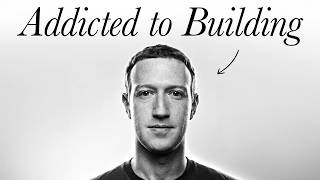 | ▶ YouTube · 41 min Founders Podcast Mark Zuckerberg's Empire |
Key takeaway: Mark Zuckerberg’s leadership at Meta is defined by a "mobile trauma" regarding Apple and Google’s platform control, driving a $200 billion-plus revenue empire to spend more on infrastructure than most national militaries to ensure it is never a "prisoner" of competitors again.
• Meta’s annual revenue exceeds $200 billion, with a user base of 3.6 billion people across Facebook, Instagram, and WhatsApp.
• Zuckerberg views the shift from desktop to mobile as a "foundational trauma" because he lost control of his territory to Apple’s App Store and Google’s Android.
• To avoid the "Dictator’s Dilemma" where leaders are insulated from reality, Zuckerberg micromanages by engaging the direct reports of his direct reports and inviting outside experts to argue against his decisions.
• Meta’s capital expenditure now exceeds the military budget of every country except the U.S., China, and Russia.
• The company executed an 11-week internal overhaul to create Meta Superintelligence Labs (MSL), paying top AI recruits "per head" fees in the hundreds of millions.
• Zuckerberg’s AI strategy is a "heads I win, tails I win" bet: if AI commoditizes, value stays with Meta’s distribution; if it doesn't, Meta owns the chips and data centers to remain independent.
• The pursuit of the Metaverse has cost approximately $90 billion to date as an attempt to "jailbreak" from the hardware control of other platforms.
Why it matters: Understanding the scale and "paranoid" defensive posture of the world’s largest social platform explains why Meta aggressively clones competitors and outspends everyone on infrastructure to bypass app store gatekeepers.
Worth it: Yes, because it provides a rare look at the specific management tactics and historical obsessions that drive the decisions of the person who controls the primary distribution channels for most mobile apps.
themobiletakeaway.com

The next issue, in your inbox.
Apple and Google updates, pricing and paywalls, and the numbers behind app businesses. Get the brief every weekday morning.
Free. Every weekday. Unsubscribe anytime.