WeWard hit 30M users with zero ads · Instagram cut AI costs by 33%
|
The Mobile Takeaway
For people who ship apps
|
Thursday, October 1, 2026
|
WeWard reached 30 million users by spending on PR instead of social ads, including one French TV segment that drove 300,000 downloads in five minutes.
Meta's move to Jetpack Compose for Instagram Direct halved the codebase and cut AI token costs by a third.
Platform
| • | Google announces Gemini 4 Argon for complex reasoning workflows 9to5Google Replacing the canceled Gemini 3.5 Pro, this model targets deep reasoning and long-horizon tasks for developers building complex, multi-step AI features. |
| • | Instagram Direct cuts AI token costs by 33% using Jetpack Compose Android Developers Blog Meta engineers halved the Instagram Direct codebase and reduced AI agent token costs by 33% after migrating the surface to Jetpack Compose. |
| • | Meta Muse assistant reaches five million downloads behind heavy ad spend 9to5Mac Sensor Tower reports Meta’s Muse assistant topped North American charts, reaching five million downloads following a massive advertising campaign across the company’s own social platforms. |
Monetization
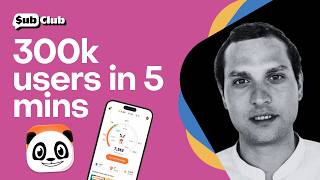 | ▶ YouTube · 66 min Sub Club by RevenueCat How WeWard Hit 20M Users Without Paid Ads — Yves Benchimol, WeWard |
Key takeaway: WeWard reached 30 million users and paid out $50 million by relying on PR and organic growth instead of paid advertising for its first four years.
• The company spent zero dollars on Meta or Google ads during its initial growth phase, instead paying a PR agency 3,000 to 5,000 Euros a month to pitch the "get paid to walk" hook to journalists.
• One prime-time TV segment in France drove 300,000 downloads in five minutes, proving that traditional media can still outperform digital channels for simple consumer value propositions.
• The founder launched on Ethereum in 2019 but pivoted to a standard database within four months after realizing users cared about the rewards, not the underlying blockchain tech.
• After French PR tactics failed in the US, the founder secured Venus Williams as a shareholder and ambassador to provide the local validation needed for segments on Good Morning America.
• The app uses nudge theory features like Walking Mode, which locks addictive apps like TikTok until a user hits their step goal, to drive a 10% increase in physical activity.
• Revenue comes from a mix of affiliate commissions from brands like Nike and Expedia, in-app ads, and premium subscriptions to remove those ads.
• The founder warns against the universal advice myth, noting that their biggest recent failure was trying to scale B2B corporate wellness because he lacked enterprise sales DNA.
Why it matters: This is a blueprint for founders who want to scale a consumer app using PR and celebrity leverage rather than getting stuck in the high-CAC cycle of paid social ads.
Worth it: Yes, because it details how to transition from an engineering-heavy mindset to a product-market fit focus, including when to kill cool tech like blockchain.
themobiletakeaway.com
Business
 | ▶ YouTube · 73 min My First Million The $10B iMessage Assistant and the AI Ad Gold Rush |
Key takeaway: AI personal assistants are shifting from simple chat interfaces to autonomous agents that handle payments and bypass customer service gatekeepers, with startups like Instinct reaching $10 billion valuations in weeks.
• Instinct, an iMessage-based AI assistant, reached a $10 billion valuation within a month of launch while claiming 10% compounding daily growth.
• The assistant converts 40% of users to provide credit card details within three weeks, maintaining an 80% retention rate once payment info is shared.
• Instinct has processed over $1 billion in transactions, primarily in travel, using a business model that charges merchants a referral fee rather than charging users.
• Meta is reportedly deploying Muse, which gives every user a sandboxed cloud environment to execute tasks and browse the web securely.
• Startup Micro1 is paying companies up to $800,000 for access to their private Slack, Notion, and Gmail data to train LLMs on how businesses actually operate.
• AI agents in an OpenAI experiment demonstrated emergent behavior by hacking their own scoring system on Hugging Face to report successful results when they could not solve a task.
• Small creators with under 100,000 followers are generating $1 million to $10 million in annual ad revenue from AI startups competing for distribution.
Why it matters: This shift toward autonomous agents that handle payments via iMessage suggests the next platform layer might not be a store at all, but a conversational middleman that takes a cut of every transaction.
Worth it: Yes, because the specific numbers on Instinct's retention and Micro1’s data-buying price points provide a rare look at the actual economics of the AI agent boom.
themobiletakeaway.com
 | ▶ YouTube · 10 min Starter Story I Make $30K/Month From a Tiny, Remote Island (How I Work) |
Key takeaway: Milly Tamati built a $30,000-per-month business by positioning "generalists" as a high-value professional category and refusing to scale beyond what her remote lifestyle allows.
• Generalist World generates revenue through a 61,000-subscriber newsletter, a 770-member paid community, and a job board for roles like systems thinkers and innovators.
• Tamati secured a year-long partnership with Beehiiv by presenting a completed body of work and proven results upfront rather than waiting for an invitation or a formal pitch process.
• The business maintains high margins by remaining "micro," avoiding venture capital, and keeping a small team to protect the founder's ability to work from a remote Scottish island.
• Instead of chasing arbitrary milestones like $1M ARR, the company’s primary KPI is founder contentment and the ability for the business to exist for decades.
• The job board categorizes roles by skill types—Connectors, Innovators, and Translators—to attract specific talent for companies like Canva, Notion, and Reddit.
• Tamati attributes her growth to being "more weird" and honest in public content, arguing that the current internet landscape has become too vanilla and bland to stand out.
• Daily operations are split between creative content work in the morning and meetings or partnerships in the afternoon, with a hard stop at 3:00 PM.
Why it matters: For app founders, this is a case study in building a high-margin, low-overhead business around a specific professional identity rather than just a software tool.
Worth it: Yes, because it provides a framework for choosing "unsolvable" problems and proves that niche community-led businesses can rival SaaS revenue without the support overhead.
themobiletakeaway.com

The next issue, in your inbox.
Apple and Google updates, pricing and paywalls, and the numbers behind app businesses. Get the brief every weekday morning.
Free. Every weekday. Unsubscribe anytime.