|
The Mobile Takeaway
For people who ship apps
|
Thursday, October 8, 2026
|
Gareth Glaser argues web publishers should adopt app-style LTV tracking as AI search cannibalizes organic traffic.
Solo founders like Max Hirsch are also using AI agents like Claude to build $15,000-a-month apps without writing their own code.
Platform
| • | OpenAI launches conversational GPT-6 models and new Intelligent UI 9to5Mac
OpenAI released conversational GPT-6 models and a new interface today, updating the core AI tool many founders use for daily operations and development. |
| • | XREAL prices its first Android XR glasses at $1,279 9to5Google
XREAL’s first Android XR glasses start at $1,279, setting a premium baseline for the hardware ecosystem supporting Google’s new spatial computing platform. |
Monetization
| • | Apple lowers standard EU in-app commissions to 26 percent RevenueCat Blog
Developers using web links now pay a 15 percent fee to Apple, while alternative in-app payment providers carry a 20 percent commission before processor costs. |
 | 🎙 Podcast · 51 min Mobile Dev Memo Podcast Gareth Glaser on the Bull Case for the Open Web |
Key takeaway: The Open Web is structurally under-monetized at $30 billion annually, but adopting app-style LTV tracking and performance modeling could unlock a $250 billion market for independent publishers.
• Google’s Ad Manager handles 8 million deduplicated ad queries per second, representing a massive scale that remains under-monetized compared to walled gardens like Meta.
• While Meta achieves CPMs between $6 and $15 through SMB performance modeling, the Open Web averages closer to $2 due to a legacy reliance on agency branding budgets.
• The recent Google antitrust ruling decouples the Ad Exchange (AdX) from Google Ad Manager (GAM), allowing small publishers to access Google’s advertiser demand via open-source tools like Prebid.js.
• Internal Jedi Blue emails revealed Google specifically incentivized Meta to stay out of mobile app mediation and Prebid to maintain Google's last-look advantage in the ad server.
• Glaser argues publishers must shift from relying on organic search traffic to an app ecosystem mindset, using paid UA on Meta or TikTok to drive users to their own newsletters and sites.
• LTV measurement, once the lifeblood of the app ecosystem, is becoming the essential metric for web publishers to justify acquisition costs as AI search cannibalizes organic traffic.
• Contextual targeting has become a commodity because LLMs allow any bidder to instantly categorize page content, shifting the competitive advantage back to performance modeling and infrastructure.
Why it matters: For app founders, the app-ification of the web means the tactics you already use—LTV modeling and paid UA—are becoming the standard for web distribution as organic search dies.
Worth it: Yes, because it explains how the Google antitrust remedy actually changes the math for small publishers and why web monetization is moving toward the mobile app model.
themobiletakeaway.com
Business
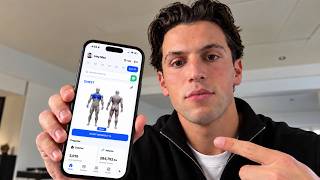 | ▶ YouTube · 13 min Starter Story I Make $13K/Month From This Simple App |
Key takeaway: Max Hirsch scaled Maxed AI to $15,000 in monthly revenue within months by using Claude to write his entire codebase and filming 5-10 organic videos daily to drive downloads.
• Hirsch built the app with zero prior coding experience by chatting with Claude AI, spending roughly $200 a month on high-level AI usage to manage the terminal and write code.
• The business runs on a lean stack including Supabase for the backend, Vercel and Expo for deployment, and RevenueCat for subscription management.
• The app uses a hard paywall strategy, charging $24.99 upfront for a year rather than relying on monthly subscriptions that users might forget to cancel.
• Marketing relies heavily on founder-led content; Hirsch filmed himself every day to produce 5 to 10 videos daily, overcoming the fear of self-promotion to find winning organic hooks.
• Paid acquisition is focused on Meta ads with a $250 daily spend, which Hirsch found more effective than TikTok due to higher intent and better demographics.
• Building in public on X accounts for roughly one-third of the app's total revenue, serving as a moat that competitors cannot easily replicate.
• Hirsch targeted the lifting niche after noticing that while Strava and Nike Run Club dominate running, there was no equivalent unified platform for weightlifters.
• The product differentiates itself through an agentic coach that adjusts workout volume based on user input, like illness or fatigue, directly within the main tracking screen.
Why it matters: It demonstrates that AI coding agents have lowered the technical barrier to the point where a solo founder can ship a competitive, revenue-generating app in a crowded niche.
Worth it: Yes, because it provides a specific blueprint for low-cost technical execution and a high-volume content strategy that works for solo founders.
themobiletakeaway.com
 | ▶ YouTube · 63 min My First Million How to find the marketing "glitches" that scale businesses to $500M |
Key takeaway: Jeff Harmon defines a "glitch" as an area of underpriced attention—like early YouTube ads costing less than a penny—and uses it to build businesses like Angel Studios.
• Orabrush scaled to a $10 million exit by using a "free plus shipping" model where the shipping fee covered the product cost, fueled by ads returning $3 for every $1 spent.
• Angel Studios raised $11 million for its first series by spending $800,000 on YouTube ads, a 7.2% cost of capital that beat Wall Street’s typical 8-12% fees.
• Harmon identifies a modern "glitch" in "agentic" shopping, suggesting founders optimize for AI agents like Grok via APIs rather than focusing solely on human UIs.
• The "Cabin" process prevents scripts from being "neutered" by email chains by locking legal, creative, and business stakeholders in a room for four days until the work is done.
• Harmon argues it is easier to train a comedian to be a marketer than the reverse, provided every joke in the ad serves the product message rather than just being funny.
• Angel Studios operates a "Guild" of 3 million members who pay $20 a month for the right to veto films before the studio commits to a theatrical release.
• A "5 million dollar rule" suggests never fighting a lawsuit worth less than $5 million, as an innovative founder can create more value in the three years a legal battle would drain.
Why it matters: App founders can bypass traditional gatekeepers by finding arbitrage in new ad platforms or using performance marketing to raise capital directly from fans.
Worth it: Yes, because it offers a specific framework for identifying underpriced distribution and protecting creative work from corporate friction.
themobiletakeaway.com
| • | 1.4 billion views for 7¢ CPI @mattgittleson Matt Gittleson says he hit 1.4 billion views in 90 days by prioritizing conversions over raw reach. He suggests finding a viral format first, then building the minimum app that format needs. To avoid "empty" views, Gittleson makes the product the payoff for the video's hook. He also warms accounts for a week before posting promos to bypass spam filters.
 | Matt ✓ @mattgittleson | 𝕏 |
1.4 billion views with UGC in 90 days. Zero paid ad spend. And a 7¢ CPI.
Not long ago I was filming TikToks on my bedroom floor for an app I'd vibecoded myself. What I'm about to break down is the exact system that took me from there to here, and it runs the same on one account as it does on a thousand.
Btw those views are counted by a third party analytics platform. Not a spreadsheet I maintain and not a number I can edit.
Here's how I got here.
I filmed every single UGC video myself for my own app, spending $0 in the process, then sold it after 6 months for $375,000.…
|