Samsung cuts Galaxy output 30% · How Roi Mulia scales AI apps
|
The Mobile Takeaway
For people who ship apps
|
Friday, October 9, 2026
|
Samsung is reportedly cutting Galaxy production 30% through 2026 because the smartphone line currently yields zero profit.
AI founders like Roi Mulia are moving from unlimited subscriptions to credit-based models to cover rising API costs and move past the low-quality apps users are starting to reject.
Platform
| • | Apple to launch touchscreen MacBook Pro and iPad mini October 27 9to5Mac Apple will debut its first touchscreen Mac and a new iPad mini on or around October 27, according to a Bloomberg report detailing an upcoming video presentation. |
| • | Google Cloud debuts Gemini agent as a universal enterprise assistant 9to5Google Announced at the Gemini at Work event, this universal agent automates tasks across Google Cloud services, offering a new integration layer for enterprise-level AI workflows. |
| • | Samsung reportedly cuts Galaxy production 30% amid zero profit claims 9to5Google Samsung is reportedly cutting Galaxy production by 30% through 2026, following internal reports that the smartphone line currently yields no profit for the company. |
| • | Mac shipments drop 11% as Apple gains market share 9to5Mac Apple grew its market share to 9.5% in Q3 despite falling shipments, outperforming a global PC market that contracted by over 20% according to IDC. |
| • | Apple appoints Steve Smith as new head of mergers and acquisitions AppleInsider Apple promoted Steve Smith to lead mergers and acquisitions, freeing up Adrian Perica to focus entirely on scaling iCloud, Fitness+, and News services. |
Monetization
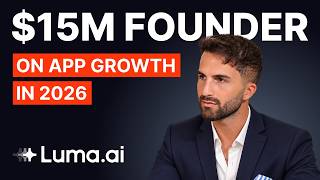 | ▶ YouTube · 24 min SubHub by Adapty How to scale past the AI slop with Roi Mulia |
Key takeaway: Scaling an app past its initial organic traction requires moving beyond AI-only development and shifting monetization from unlimited subscriptions to credit-based models to cover rising API costs.
• Roi Mulia, who has generated $15 million in revenue across 50 million downloads, warns against AI slop—apps built entirely with prompts that users increasingly reject for their identical neon aesthetics and low quality.
• In one case, Mulia purchased 50% of an AI-built app that was making thousands monthly, only to see downloads crater within weeks as competitors flooded the niche.
• He argues that unlimited subscriptions are becoming unsustainable for AI apps because of per-use GPU and API costs, leading to a resurgence in credit top-ups and token refills.
• To scale, Mulia uses a two pulses framework: iterating on marketing creatives to lower CPI and fixing the product funnel if installs do not convert to revenue.
• When budgeting, he recommends spending 25% on the product to ensure it is not sloppy and prioritizing external feedback over internal design opinions.
• Mulia views utility apps as the new games, suggesting founders incorporate gamification to maintain retention in a crowded market.
• Platforms like Adapty and RevenueCat have already added virtual currency dashboards to support the industry-wide move toward consumable credits.
Why it matters: Founders must balance the ease of AI development with the reality that low-barrier niches attract instant competition and high operating costs.
Worth it: Yes, because it offers a proven framework for moving from a simple AI wrapper to a sustainable business model.
themobiletakeaway.com
 | ▶ YouTube · 11 min Superwall (YouTube) What 500M App Downloads Taught Me About Human Psychology |
Key takeaway: High-view viral content often fails to drive revenue because users lack a functional reason to download; instead, the app must be the "main character" of the content to bridge the gap between watching and subscribing.
• Cocopix saw 30 million views on prank videos that did not convert, while "Before/After" content drove downloads by providing a direct reason to use the app.
• The "Roast" method used by language app Pingo combined entertainment with product utility by having an AI voice mock users' mistakes, making the use case visible and fun.
• Cal AI scaled using over 2,000 influencers, finding that cost per download actually decreased as they grew because repeated exposure built the familiarity needed for a purchase.
• Welltory’s paywall focuses on the user's pain point—stress draining energy—rather than listing features, making the decision to pay feel like a solution to a problem.
• Onboarding for a study app can convert better by showing a graph of a user's specific struggle, such as hours studied versus grades achieved, and then demonstrating a "better way" like active recall.
• The Bryce app campaign generated millions of views but only $500 in revenue, illustrating how vanity metrics can mask a total failure to drive intent.
• Founders often hide their app in videos to avoid looking like an ad, which results in high views but zero downloads; the product should be shown doing something interesting instead.
Why it matters: Understanding that the buying decision happens during onboarding and content exposure—not just at the paywall—allows founders to align their marketing promises with the actual app experience.
Worth it: Yes, because it provides specific, actionable tactics from named apps like Pingo and Welltory that move beyond generic growth advice.
themobiletakeaway.com
Business
 | ▶ YouTube · 84 min David Senra Channeling Rage, Rolling Calls & Building an Entertainment Empire | Ari Emanuel, WME & TKO |
Key takeaway: Ari Emanuel built a multi-billion dollar entertainment empire by moving from high-margin representation to owning the underlying assets and using global rights data to predict the shift toward live sports and ad-supported streaming.
• Emanuel and Silver Lake’s Egon Durban acquired the UFC for $4.2 billion despite critics claiming they overpaid; they later secured a $300 million annual deal with Disney plus pay-per-view rights that nearly covered the entire purchase price.
• During the 2009 financial crisis, Emanuel paid $44 million in cash buyouts to remove old leadership during the William Morris merger, describing the move as stealing a 100-year-old company while his own firm was nearly insolvent.
• The strategy shifted to ownership because negotiating global rights for clients provided the data to see that live sports were the only content immune to disintermediation by AI and streaming shifts.
• Emanuel used a framing tactic to buy the UFC: he asked the seller to close their eyes and name the big number that would make them happy, which set the anchor at $4 billion.
• After Amazon pulled a $260 million rubber stamp deal and lowered it to $140 million, Emanuel walked away and leveraged a WhatsApp conversation with Disney’s Kevin Mayer to close a better deal mid-meeting with a competitor.
• Elon Musk advised Emanuel in 2007 that live events were the only asset class AI could not replace, leading to the formation of a separate live-events business called Mari.
• Emanuel’s Roll the Calls philosophy involves calling targets repeatedly until they answer, treating business as a puzzle solved through constant, aggressive communication.
Why it matters: It demonstrates how to use service-level data to identify and acquire the high-leverage assets that platforms eventually depend on.
Worth it: Yes, for the specific negotiation tactics and the lesson on using agency to force a Plan A to work when there is no Plan B.
themobiletakeaway.com

The next issue, in your inbox.
Apple and Google updates, pricing and paywalls, and the numbers behind app businesses. Get the brief every weekday morning.
Free. Every weekday. Unsubscribe anytime.