|
The Mobile Takeaway
For people who ship apps
|
Monday, October 12, 2026
|
Google Play now lets you run A/B tests on custom store listings to help you win back churned users.
Vadim Strizheus scaled his AI video editor to $11,000 monthly revenue in five months. He used AI coding tools and he's now posting three to six times a day on Instagram to reach new users.
Platform
| • | Appealing terminations in public @DanKulkov At least 12 small founders reported sudden Apple account terminations last week. While specific reasons for most remain unclear, sharing the stories publicly seems to have helped some get a response. Dan Kulkov says Apple messaged him details after he posted about his termination. He says the issue was his high number of version rejections, and he's now negotiating a roadmap with the team.
 | Dan Kulkov ✓ @DanKulkov | 𝕏 |
btw, apple finally messaged me the details!
my theory was right — number of version rejections
but there is more to it
already made progress with them
will record an update video once it's done
thank you for your support!
wouldn't be possible without u guys :) https://t.co/N8OEGlXUu1
|
| • | Google Play launches A/B testing for Custom Store Listings Phiture
You can now target specific listings to churned users and run A/B tests to find the creative that best drives re-installs. |
| • | Apple may hike iPad mini starting price to $799 9to5Mac
Bloomberg reports the upcoming OLED iPad mini could start near $799, a $200 jump that significantly raises the entry price for the smallest tablet. |
Monetization
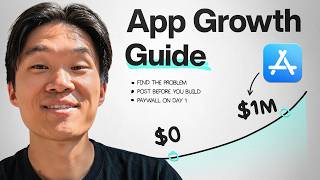 | ▶ YouTube · 10 min Superwall (YouTube) If I Started From 0, Here's How I'd Speedrun an App to $1M/yr |
Key takeaway: Validating an app idea through short-form content before writing code prevents building products that people find interesting but won't actually pay for.
• Analyze niche apps on Sensor Tower to confirm monetization; for example, Cal AI generated $2 million in revenue from 400,000 downloads.
• Read user reviews to find specific frustrations or underserved groups, which defines the base of what your app must deliver.
• Save at least 20 high-performing videos in your target niche to identify winning formats and messaging before starting development.
• Scrap any idea if you cannot conceive a video concept that makes the app interesting to the right audience, as marketing problems do not disappear after the app is built.
• Build the first version using AI coding tools and a core loop framework, intentionally excluding features like social feeds or AI coaches until you have user data.
• Align App Store screenshots and onboarding flows with the specific wording and pain points that went viral in your pre-validation videos.
• Scale by measuring intent over views; in one case, a creator generated $445,000 in revenue from 115,000 views, while another generated only $3,000 from 849,000 views.
Why it matters: This framework moves app development from a build-and-pray model to a content-first validation system that ensures a market exists before you commit resources.
Worth it: Yes, because it provides specific revenue-to-download benchmarks and a concrete method for testing market demand using social media.
themobiletakeaway.com
| • | AI agents offer travel apps lower distribution costs via direct relationships Mobile Dev Memo
Travel suppliers maintain direct consumer relationships, allowing AI agents to lower distribution costs by replicating the discovery functions of traditional online booking agencies. |
Business
 | ▶ YouTube · 13 min Starter Story My First SaaS Project Just Hit $11K/Month |
Key takeaway: 19-year-old Vadim Strizheus scaled his AI video editor, Vugola, to $11,200 MRR in five months by using AI coding tools and a high-volume Instagram distribution strategy.
• Vadim reached $134k ARR and 50,000 sign-ups by positioning Vugola as an AI video editing agent for creators and brands.
• He built the initial version in four months using Lovable, a Claude/Codex wrapper, before teaching himself to migrate to a professional stack of GitHub, Vercel, and Supabase.
• The business runs on a lean budget, including $25 for Supabase and $15 for Manychat, with AWS rendering costs paid on a per-use basis.
• His growth strategy involves identifying viral competitor formats and then replicating their text overlays, audio, and hook timings.
• He posts 3 to 6 times daily on Instagram, reusing the same demo footage while only changing the hook and audio to minimize daily effort to 45 minutes.
• Manychat automates the conversion process by handling DM responses to commenters, which helped scale the app from $3,000 to $11,000 MRR.
• Vadim advises founders to simplify everything, claiming that reducing user friction and development complexity directly increases revenue.
Why it matters: This is a blueprint for solo founders to ship functional software and find distribution without a technical background or a marketing budget.
Worth it: Yes, for the specific breakdown of vibe coding tools and the repeatable 45-minute daily marketing workflow.
themobiletakeaway.com
 | ▶ YouTube · 72 min David Senra Creating Muse: The Fastest-Growing AI Product Since ChatGPT | Alexandr Wang, Meta |
Key takeaway: Meta built Muse with a small, high-agency team of under 200 people, prioritizing a "personal agent" vision over the industry trend of coding agents.
• Meta intentionally kept the Muse team under 200 people to avoid "PM Hell," where products become a "Frankenstein" of conflicting viewpoints from different departments.
• The team managed development via a spreadsheet of 100+ specific behaviors; they refused to ship until a model checkpoint hit green across every numerical threshold.
• While competitors like OpenAI and Anthropic focused on coding agents, Meta bet on "personal agents" to leverage their 3.5 billion daily users on Instagram and WhatsApp.
• The first prototype was built in two weeks, but the team spent the next seven months "sanding out" details to turn a fragile demo into a reliable consumer product.
• Marketing was "screenshot-driven," using a mascot called Jolly to make AI interactions shareable and recognizable in group chats.
• Alex Wang describes the user journey as a "trust fall," moving from small tasks to "full trust" where users dump their thoughts and plans into the agent.
• Mark Zuckerberg personally used the prototype to analyze his MMA training videos, providing direct feedback on product utility.
Why it matters: For founders, this is a blueprint for shipping AI products that feel like a single, cohesive experience rather than a collection of features.
Worth it: Yes, because it details the specific "Evals" and team structures used to turn a "magical but broken" prototype into a stable product.
themobiletakeaway.com