How one founder runs a $6-7M ARR app alone · Apple's web offer catch
|
The Mobile Takeaway
For people who ship apps
|
Tuesday, October 20, 2026
|
Josh Mohrer runs Wave AI alone at $6-7M ARR, using AI agents for engineering and support.
Jake Mor says Apple rejected his app because a yearly plan was sold only on the web; every web subscription length needs an in-app match.
Platform
| • | Apple buys Samplab's AI music tech, hires some staff 9to5Mac Apple struck a June deal for Swiss startup Samplab's assets and some staff. Its AI tools separate stems and edit individual notes in existing recordings. |
Monetization
 | ▶ YouTube · 42 min SubHub by Adapty |
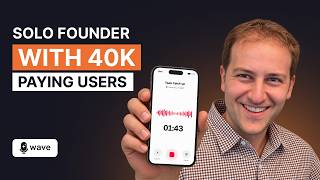
Key takeaway: Josh Mohrer runs Wave AI as a solo founder, reaching 40,000 paid subscribers and $6-7M ARR by using AI agents to replace engineering and support teams.
• Wave AI processes 15,000 hours of audio daily and maintains a 4.9-star rating with zero full-time employees besides the founder.
• A custom Intercom system triages 50 to 100 daily tickets, escalating from Claude Sonnet to Opus to search Google Cloud logs for bugs; Mohrer still reviews each one.
• The app uses an automated marketing system that analyzes performance and generates new image ads for Apple, Google, and Meta without using their native UIs.
• A key conversion tactic involves showing a paywall immediately upon app open, including a forced 3-second delay before the close button appears.
• The business recently lowered prices for users because backend AI model costs decreased, prioritizing a shopkeeper profit-first mentality over VC-style growth.
• Technical maintenance focuses heavily on the hairy task of reliable audio recording across fragmented iOS and Android hardware.
• Mohrer runs the business from a Claude Code window with about 50 tabs open, triaging support and shipping A/B tests.
Why it matters: This demonstrates that current AI leverage allows a single founder to out-execute well-funded competitors by eliminating the communication overhead and rituals of large teams.
Worth it: Yes, because it provides specific revenue numbers and automation tactics for running a high-scale app without hiring.
themobiletakeaway.com
| • | How Celebs hit 94th-percentile retention among AI apps RevenueCat Blog Celebs shows its paywall after the first generation; over half its weekly subscribers renew after week one, versus 37.7% for the median AI app. |
| • | ChatGPT can rank your app differently than store search App Growth Summit AI assistants like ChatGPT now recommend apps before users open a store. In one example, an app ranked first in Play Store search and third in ChatGPT. |
| • | Your best video ad rarely works as a static image AppsFlyer Blog In AppsFlyer's data on 1.2 million creatives, the tone, CTA or pitch that wins on video usually loses on static images. Test them separately. |
| • | How Noom and Opal use human-centric onboarding to drive LTV RevenueCat Blog Successful apps like Noom use pre-paywall 'aha!' moments and specific user language to differentiate from generic competitors and improve cohort LTV, RevenueCat reports. |
Business
| • | Apple: every web subscription length needs an in-app match @jakemor Jake Mor says Apple rejected his app for selling a yearly plan on the web via Stripe without a matching IAP. Every duration offered on the web must also be offered in-app; prices can differ.
Just got off the phone with Apple. In one of my apps I offer 2 products - 1 weeky, 1 yearly.
In the USA only, i use @superwall for app2web
Weekly = In-app purchase
Yearly = Stripe
Outcome = rejected
Turns out, every "product" distinguished by the period / duration of your subscription that is offered on the web must also be offered in-app via IAP. Pricing can differ.
So in my case, since yearly was only offered on the web, I must include a yearly option in-app. but my yearly option in-app can be a different price.
|

 | ▶ YouTube · 46 min My First Million |
Key takeaway: Mark Zuckerberg and other high-level leaders prioritize extreme talent density and 'pre-mortems' to make fewer, better decisions.
• Mark Zuckerberg believes winning in AI requires a small team of 20 to 200 people rather than thousands, prioritizing 'talent density' where every member can hold the entire project in their head.
• Zuckerberg regularly texts about 20 smart people outside his official advisors to ask, 'What are we getting wrong here?'
• Jack Dorsey used a 'pre-mortem' strategy before launching Square, writing a list of 140 specific reasons why the company might fail to identify and avoid fatal mistakes.
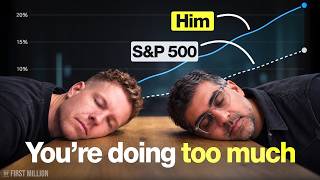
• An analysis of a top-performing private investor showed he beat the S&P 500 in 11 out of 12 years by making only 2.9 decisions per year, often researching a single company for months before acting.
• A core leadership tactic is distinguishing between reversible and irreversible decisions; successful founders avoid agonizing over small, reversible choices to save energy for the ones that cannot be undone.
• Scale AI founder Alexandr Wang says Zuckerberg answers his WhatsApp questions with 'extremely thorough, extremely crisp' replies.
Why it matters: For small app teams, these tactics validate staying lean and provide a framework for making high-stakes decisions without getting paralyzed by minor ones.
Worth it: Yes, because the talent density and pre-mortem concepts are directly applicable to how a founder staffs and plans a product launch.
themobiletakeaway.com
 | ▶ YouTube · 71 min David Senra |
Key takeaway: Success in building products like the iPod or Tesla Roadster often hinges on "negative realizations"—the disciplined choice to ignore standard market requirements to solve one specific, hard problem.
• Ben Wilson defines "zeal" using Aristotle’s description: the specific pain felt when you see a peer accomplish something you’re capable of but haven’t done yet.
• The Wright Brothers realized "control" was the hard problem, so they spent years on gliders to master steering before they ever worried about engine-powered lift.
• Steve Jobs failed at NeXT because he wouldn’t make trade-offs; he demanded five top priorities at once, which led to a late, over-engineered machine.
• The iPod won because Jobs ignored storage capacity and file format wars to focus exclusively on a fast, simple user experience.
• Elon Musk used similar logic for the Tesla Roadster, deciding affordability didn’t matter as long as the car was "cool, sexy, and fast."
• Isaac Newton's "Waste Book" and Eminem's hundreds of notebooks were places to dump unrefined thoughts, removing the pressure of perfection.
• Wilson says focus meant shutting down his agency and no longer producing other people's podcasts, to commit to his own.
Why it matters: Product-market fit often comes from what you choose to leave out rather than what you include.
Worth it: Yes, it shows how "saying no" translates into actual product decisions for world-class founders.
themobiletakeaway.com
| • | Sean Allen shuts his iOS course school as AI kills sales @seanallen_dev on X Sean Allen says his iOS dev course sales "plummeted due to AI" to basically $0, so he cancelled hosting. His school stays up until November 24 for buyers to download videos; older courses are now free. |

The next issue, in your inbox.
Apple and Google updates, pricing and paywalls, and the numbers behind app businesses. Get the brief every weekday morning.
Free. Every weekday. Unsubscribe anytime.