Apple must allow rival app stores in Australia · How Clark hit $31K a month
|
The Mobile Takeaway
For people who ship apps
|
Thursday, October 22, 2026
|
An Australian judge ordered Apple to allow alternative app stores, and Meta faces a $25 billion fine for privacy violations.
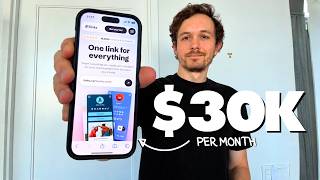
Charlie Clark shares how he reached $31,500 in monthly revenue by undercutting the market leader's pricing.
Platform
| • | Australian judge orders Apple to allow rival iPhone app stores 9to5Mac An Australian federal judge ruled Apple must permit alternative app stores following an Epic Games lawsuit, though Apple has already confirmed it will appeal. |
| • | Meta fined $25 billion for New Mexico consumer privacy violations AppleInsider A New Mexico judge ordered Meta to pay the record penalty for 43 million state consumer privacy violations tied to the Cambridge Analytica scandal. |
| • | Anthropic launches Claude Duet, an assistant that works across apps 9to5Mac The AI assistant manages emails and calendars across connected services and can continue executing tasks while the application is closed. |
| • | Apple pulled whoo, then an investor froze its cash @masayang on X Japanese location-sharing app whoo (35M downloads) was pulled from the App Store in August, and Apple terminated developer LinQ's account in September, two months after a ¥1.1B (~$7M) Series A. Now one of its VC investors has provisionally seized LinQ's deposits, alleging it breached investment warranties by violating Apple's terms before the investment. An unverified claim says LinQ sent precise location data to ad companies despite saying it didn't. |
Monetization
 | 🎙 Podcast · 45 min Mobile Dev Memo Podcast |
Key takeaway: Amazon is protecting its $80 billion advertising business by forcing AI shopping agents to operate on its own terms, trading its unique inventory and identity data for off-site ad revenue.
• Amazon’s advertising business generates roughly $80 billion annually and accounts for an estimated 80% or more of its total retail profit.
• The rise of third-party AI agents threatens the $55 billion Amazon earns from on-site sponsored ads, as automated shopping bypasses traditional search and product detail pages.
• A new partnership with OpenAI allows ChatGPT to ingest Amazon’s ratings, reviews, and pricing to serve ads that link back to Amazon for one-click checkout.
• New "Sponsored Prompts" in AI interfaces convert to sales 48% more often than standard ads, with users spending 21% more on average.
• Amazon’s "identity spine," bolstered by deals with hardware makers like Roku, now reaches 90% of US households with de-duplicated frequency data.
• The company is launching "listening products" codenamed B-Frontier and B-Eclipse to feed real-world context into its internal AI shopping agent, Alexa Plus.
Why it matters: For app founders, this confirms that the "agentic" future won't be a decentralized web of bots, but a controlled extension of existing ad platforms where identity and attribution remain locked within walled gardens.
Worth it: Yes, because it explains the economic reality of why AI agents haven't yet disrupted e-commerce and how the biggest player is co-opting the technology.
themobiletakeaway.com
| • | Netflix cuts 2026 revenue guidance as ad growth slows Mobile Dev Memo While 60% of new subscribers choose the ad tier, Netflix lowered revenue projections because the plan currently earns less per member than standard subscriptions. |
Building
| • | Which growth channels work at which ARR stage Josh Peleg on LinkedIn (slide from his New York App Week talk) Josh Peleg says data from 100+ apps at BlueThrone shows clear patterns: before $1M ARR, Apple Search Ads and UGC do the heavy lifting; paid UA can start at $1M ARR; UGC "seems to break around $7M ARR," when influencers come in and ASA shifts to defending brand keywords. The most common mistake he sees: "Founders trying to make every channel work at $500K ARR." |
Business
 | ▶ YouTube · 16 min Starter Story |
Key takeaway: Charlie Clark grew Liinks to $31,500 in monthly recurring revenue by undercutting the market leader's pricing and scaling through a consistent $100-per-day Google Ads spend.
• Clark built the initial version of the app in a strict two-week window while working as a senior engineer at Squarespace.
• The service currently maintains 5,484 active subscribers with a high trial-to-paid conversion rate of 66.82%.
• Pricing is intentionally anchored against Linktree; Clark charges $5 per month for his starter plan to undercut Linktree’s $8 entry tier.
• After Instagram Ads became non-viable due to algorithm shifts in 2021, Google Search Ads became the primary growth engine at a steady $3,000 monthly spend.
• Expansion revenue comes from a $12-per-month Pro tier for managing multiple profiles, with some agency customers paying over $100 monthly.
• Monthly operational overhead is kept to roughly $800, covering DigitalOcean, AWS, Resend for email, and Tinybird for user-facing analytics.
• Clark waited to quit his full-time job until the app's revenue matched his professional salary, providing a safe transition to solopreneurship.
Why it matters: This is a clear blueprint for a "fast follower" strategy, showing how a solo founder can win by offering better aesthetics and lower pricing in a validated, high-demand category.
Worth it: Yes, because it provides transparent unit economics and the specific ad-spend tactics used to scale a micro-SaaS to a full-time salary.
themobiletakeaway.com
 | ▶ YouTube · 37 min My First Million |
Key takeaway: Natural Money Makers (NMMs) prioritize logical detachment and situational arbitrage over passion or industry-specific expertise to build wealth.
• NMMs treat money with cold logic; Carl Icahn once fired 12 floors of staff because he couldn't identify their function, with no impact on business performance.
• Nick Kokonas, who studied philosophy but excelled at math, built a $100 million arbitrage play by laying fiber optic cables to beat exchange price lags by 30 seconds.
• The "second derivative" rule for wealth preservation suggests only spending the returns of your investments, never the principal income itself.
• Alinea restaurant founder Nick Kokonas maintained a 20% profit margin on $26 million in revenue by treating a creative business with trader-like financial rigor.
• One founder cut COGS by 50% by ignoring the perceived complexity of manufacturing and simply paying experts to clone an existing European factory in the U.S.
• NMMs distinguish between "unfamiliarity" and "risk," allowing them to enter complex fields where others see too much friction.
• Syed Balkhi uses profits from software plugins to buy gas stations as triple net leases, creating high-return cash flow with almost no operational management once the deal is set.
Why it matters: For app founders, these tactics—like the "second derivative" rule or focusing on situational arbitrage—provide a framework for long-term capital preservation and operational efficiency that transcends passion-led growth.
Worth it: Yes, because the specific frameworks for spending and the distinction between risk and unfamiliarity are immediately applicable to business logic.
themobiletakeaway.com

The next issue, in your inbox.
Apple and Google updates, pricing and paywalls, and the numbers behind app businesses. Get the brief every weekday morning.
Free. Every weekday. Unsubscribe anytime.