Google says Gemini trails Claude · Instagram tests long-form video
|
The Mobile Takeaway
For people who ship apps
|
Tuesday, October 27, 2026
|
Google admitted its Gemini 4 Argon model trails Claude and GPT-6 in Android coding rankings, while Instagram is testing 90-minute horizontal videos.
Babbel gets 27% of its revenue through web checkout, avoiding Apple's 30% cut, while Burner's founder explains how to turn high-churn users into high-LTV subscribers.
Platform
| • | Apple releases iOS 27.2 with Siri AI and Duo features 9to5Mac iOS 27.2 brings upgraded Siri AI, two iPhone Duo-exclusive features, and new Messages and Apple TV app functionality. |
| • | Apple updates iPad mini with A20 Pro chip and OLED display Apple Newsroom The new iPad mini features an A20 Pro chip and OLED display, raising the performance floor for resource-intensive apps in a thinner, water-resistant design. |
| • | Google's own Android Bench ranks Gemini 4 Argon behind Claude and GPT-6 9to5Google Google’s updated Android Bench rankings place Gemini 4 Argon behind the latest Claude and GPT-6 models for mobile development assistance. |
| • | Instagram tests 90-minute horizontal video format with US creators 9to5Mac The platform is testing 90-minute horizontal videos with select US creators, signaling a push into professional long-form content to compete directly with YouTube. |
Monetization
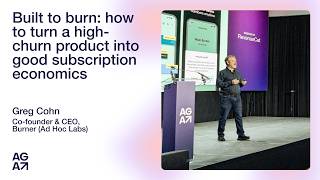 | ▶ YouTube · 23 min RevenueCat (YouTube) |
Key takeaway: Burner founder Greg says high-churn utility apps should stop fighting gravity and optimize for returning users, who now drive over 30% of Burner's new subscription revenue.
• Burner's month-one retention is just 38%, yet returning users make up about 10% of total MRR, and a returning subscription is worth 25% more than a new user's.
• The Pause SKU offers users a $1.99 monthly rate to park their number instead of canceling a $9.99 plan, saving about 10% of cancellations.
• A 30-day grace period keeps expired numbers active and shows incoming texts in the app inbox to show what the user is missing.
• Returning users skip standard onboarding and are offered free trials even if they have used one before, converting to premium at double the rate of new users.
• Defaulting returning users to 12-month plans led to a 5x increase in the annual take rate for those subscription spells.
• Users on their fourth or later subscription have grown 6x since 2022.
Why it matters: For utility apps with naturally short-term use cases, shifting focus from preventing churn to easing reactivation can unlock a high-LTV segment that traditional retention metrics miss.
Worth it: Yes, a specific, counter-intuitive churn framework with real benchmarks.
themobiletakeaway.com
 | ▶ YouTube · 15 min RevenueCat (YouTube) |
Key takeaway: Babbel generates 27% of its revenue through web checkouts and has maintained a premium-only model since 2009 to filter for committed users willing to do the work.
• The company rejects the freemium model, arguing that users unwilling to pay are unlikely to commit to the effort required for language learning.
• By focusing on web-based transactions, Babbel bypasses the 30% platform fee for over a quarter of its revenue, though Babbel US CEO Julie Hansen notes that Stripe and web maintenance are not free.
• The onboarding funnel is intentionally long and "nosy," asking users about their study goals, age, and motivation to winnow out uncommitted prospects.
• Babbel sells lifetime subscriptions to remove the "performance pressure" of monthly renewals, allowing users to drop in and out of the app over several years without feeling they are wasting money.
• The company admits that its web-first legacy led them to run an outdated version of Apple’s StoreKit for three years because they were "defocused" from app-store-specific marketing.
• Expansion into the US was delayed until the brand was established in Europe; the US is now their largest market and primary growth driver.
• Win-backs and reactivation get heavy emphasis because language learning is naturally cyclical, making former users a high-value segment.
Why it matters: This shows how a legacy web business successfully transitioned to mobile by prioritizing unit economics and user intent over standard app store growth hacks.
Worth it: Yes, it provides a rare defense of the premium-only model and concrete numbers on the value of web-based checkout for app businesses.
themobiletakeaway.com
| • | Walmart launches Gateway to control third-party AI shopping agents Mobile Dev Memo Walmart’s new Gateway and Agent Profiles route third-party AI requests through its internal Sparky agent to maintain control over checkout, data limits, and primary customer relationships. |
Business
 | ▶ YouTube · 125 min My First Million |
Key takeaway: Nick Kokonas built a career on the arbitrage of time and intensity, moving from options trading to selling restaurant platform Tock to Squarespace by identifying opaque systems with the least competition.
• Kokonas used a nausea scale to calibrate risk: if you feel great every morning, you aren't taking enough risk; if you are throwing up, it is too much.
• In the 1990s, he read obscure CFTC rules to find a loophole allowing direct NYC-to-Chicago communication, gaining a 20-second edge over big banks; his firm once made over $100M profit in a year.
• He advocates for the Smallest Highest Hoops strategy, seeking out the most difficult, opaque systems because they have the least competition compared to big hoops on the ground.
• To break performance anxiety in new hires, he enforced a Day One rule where every trader had to make a trade on their first day, similar to Facebook’s policy of shipping code on day one.
• He views expertise as a trap and intentionally switches industries every 10 years to avoid complacency, calling it setting up a new prison of his own choosing.
• Tock was built by applying first-principles thinking to restaurant seats as perishable commodities, using dynamic pricing and eliminating the host stand bottleneck.
• Intensity is the primary strategy: Kokonas describes the path to great as making mostly shit 99% of the time until the perfect balance is found.
Why it matters: For app founders, this provides a framework for identifying market gaps—specifically looking for arbitrage in time or efficiency—and emphasizes that shipping on day one is a tool to prevent paralyzing perfectionism.
Worth it: Yes, the Smallest Highest Hoops model is a sharp way to choose which features or markets to build for.
themobiletakeaway.com

The next issue, in your inbox.
Apple and Google updates, pricing and paywalls, and the numbers behind app businesses. Get the brief every weekday morning.
Free. Every weekday. Unsubscribe anytime.