Black Friday converts old users · How a utility app monetized churn
|
The Mobile Takeaway
For people who ship apps
|
Wednesday, October 28, 2026
|
RevenueCat data shows half of Black Friday’s new payers came from users who installed three months earlier.
The top apps convert a fifth of installs to trials, while the median app manages only six percent. A utility app reached $31.4 million in revenue by treating churned users as regulars who return for specific needs rather than tourists who leave forever.
Platform
| • | Apple adds AI assistants and MCP automation to Creator Studio Apple Newsroom Logic Pro and iWork apps gain beta AI assistants this November, while new Model Context Protocol support enables automated workflows across Apple’s updated Creator Studio suite. |
| • | ChatGPT can now manage iCloud Mail and Calendar AppleInsider OpenAI released iCloud plugins that let ChatGPT read emails and manage calendar events, allowing the assistant to schedule or update appointments using inbox data. |
| • | Apple announces M6 iMac with 5x faster on-device AI performance Apple Newsroom The M6 chip refresh features a dual 16-core Neural Engine that runs local AI models and coding agents five times faster than the M4. |
Monetization
| • | Apple's WebKit identity block isn't ATT for the web Mobile Dev Memo Apple is moving WebKit to dynamic rules that block web identity resolution across all iOS browsers, without favoring a specific Apple-owned advertising product. |
| • | Black Friday deals convert long-time free users RevenueCat Blog In apps running promos, about half of the Black Friday lift in new payers came from users who installed 3+ months earlier, RevenueCat's 5,000-app study finds. |
| • | Top 10% of apps convert 20% of installs to trials Growth Gems The median app converts 6% of installs to trials and the top 10% convert 20%; nine in ten installs never start one. |
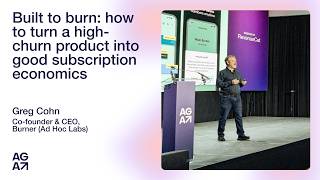 | ▶ YouTube · 23 min RevenueCat (YouTube) |
Key takeaway: Burner transformed a high-churn utility app into a $31 million business by treating churned users as "regulars" who return for specific needs rather than "tourists" who leave forever.
• Burner achieved a 15% install-to-paid conversion rate, nearly 6x the utility app median, despite a Month 1 retention rate of 38% which lags significantly behind the 54% industry benchmark.
• The company introduced a "Pause" SKU at $1.99 per month—an 80% discount—allowing users to keep their phone number during periods of inactivity, resulting in a 10% save rate.
• Returning users convert to new high-value features like eSIM at 3x the rate of first-time users and show 2.2x higher retention at Month 12.
• By offering returning users a "softer paywall" with 30 days of free premium, the company doubled its reactivation conversion rate.
• Defaulting returning users to a 12-month annual plan instead of a monthly subscription led to a 5x increase in the annual take rate for that cohort.
• Revenue from returning users now accounts for 37% of total monthly revenue, up from 25% in 2022.
• The business has maintained 25% year-over-year growth since 2020, reaching $31.4 million in revenue in 2024 with less than $5 million in total venture capital raised.
Why it matters: For apps with episodic use cases, focusing on a "situationship" with churned users through reactivation flows and pause options can be more profitable than fighting natural churn patterns.
Worth it: Yes, it provides rare, specific revenue data and a proven playbook for monetizing high-churn utility apps.
themobiletakeaway.com
 | ▶ YouTube · 15 min RevenueCat (YouTube) |
Key takeaway: Babbel built a successful subscription business by rejecting freemium models and frictionless funnels in favor of high-commitment "serious learners."
• Babbel moved away from ad-supported and freemium models early, with CRO Julie Hansen stating, "We sell homework. We have to find people who are actually motivated to do their homework."
• Web checkouts generate 27% of Babbel’s revenue, providing higher margins by avoiding the 30% app store fee and allowing for faster data-driven release cycles.
• The onboarding funnel intentionally adds friction by asking users for their age, study goals, and daily time commitment to build a "belief in the outcome" before asking for payment.
• Lifetime access is a key offering because it removes the "performance pressure" of monthly subscriptions, where users might quit if they feel they aren't progressing fast enough to justify the next bill.
• Focusing heavily on web growth led the company to run an outdated version of Apple’s StoreKit for three years without an update.
• The company treats its funnel as a "winnowing effect" to identify the most dedicated users, which Hansen argues leads to better product-market fit and higher NPS.
• Babbel’s Berlin headquarters hosts 75 different nationalities, providing the linguistic talent necessary to scale globally without following the "start in the USA" playbook.
Why it matters: For apps that require user effort, adding friction can actually increase conversion by qualifying the audience and building the psychological commitment needed to stick with the product.
Worth it: Yes, because it offers specific numbers on web-checkout revenue and a logical defense for using friction and lifetime tiers in a subscription-first market.
themobiletakeaway.com
Business
 | ▶ YouTube · 7 min Launched by RevenueCat |
Key takeaway: A solo developer rejected a $75,000 acquisition offer for a golf app with only $12,000 in lifetime sales, betting on high conversion metrics despite threats from a larger competitor.
• The app demonstrated strong product-market fit with a 75% trial conversion rate, significantly higher than the industry average of 35% to 40%.
• Overall conversion from install to paying user reached 17%, supported by a 25% trial start rate.
• A prominent golf brand offered $75,000 after the developer asked for $250,000, which would have been a massive multiple on his $12,000 total revenue.
• The offer came with a strict non-compete clause that would have barred the developer from working on any other golf-related software projects.
• The potential buyers issued a "gotcha" threat during negotiations, stating they would build a competing feature and use their superior distribution to crush the app if he didn't sell.
• Following the rejection in October, the developer fell into a "dark hole" of regret as revenue and trials plummeted through February due to extreme industry seasonality.
• After calculating a net profit of just $1,000 for the period, the founder realized it would take 75 years to earn the $75,000 he turned down at that specific run rate.
Why it matters: Founders must weigh the value of high-performing metrics against the risks of industry seasonality and the restrictive nature of non-compete clauses in early-stage exits.
Worth it: Yes, because it provides a raw look at the psychological toll of turning down an acquisition and the reality of competing against established players with better distribution.
themobiletakeaway.com

The next issue, in your inbox.
Apple and Google updates, pricing and paywalls, and the numbers behind app businesses. Get the brief every weekday morning.
Free. Every weekday. Unsubscribe anytime.