Apple preps apps for a touch MacBook Pro · How Praktika hit $50M ARR
|
The Mobile Takeaway
For people who ship apps
|
Thursday, October 29, 2026
|
Apple's bringing touch to the MacBook Pro with new developer resources, while Google launched a platform to surface app features in Gemini and Search.
Praktika CEO Adam Turaev explains how the company hit $50M ARR by giving micro-influencers full creative freedom and moving the app to native iOS.
Platform
| • | Apple readies developers for MacBook Pro with Touch Apple Developer News Apple is getting teams ready for MacBook Pro with Touch, with new developer videos, Group Labs sign-ups, articles and resources. |
| • | South Korea fines Apple $15.5M and orders App Store changes 9to5Mac Google was fined too. Both must allow external payment methods and fix app review delays; Apple must also end discriminatory commissions. |
| • | Google opens Gemini and Search to app integrations 9to5Google Google’s new Connected Apps Platform gives developers a unified way to bring their app’s capabilities directly into Gemini and Search. |
| • | Google launches Gemini 4 Carbon, claiming big coding and agentic gains 9to5Google Two weeks after Argon, Google’s next frontier model promises significant gains across coding and agentic tasks. |
Monetization
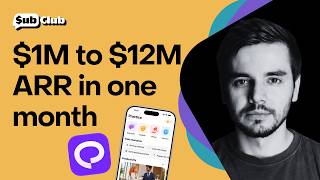 | ▶ YouTube · 62 min Sub Club by RevenueCat |
Key takeaway: Praktika scaled from $1M to $12M ARR in a single month by leveraging a micro-influencer strategy that prioritized creator freedom over founder control.
• The company currently generates $50M ARR with a team of 40 people, maintaining a revenue-per-employee ratio of over $1M.
• A single viral video from a TikTok creator with fewer than 5,000 followers drove the jump to $12M ARR after generating 30 million views across Instagram, TikTok, and YouTube.
• CEO Adam Turaev’s core influencer rule is to never tell creators how to do their jobs or force them through a founder's approval filter, which he believes kills viral potential.
• The team targets "rising stars" using filters for accounts with low follower counts but high recent reach, paying a fixed fee plus a performance bonus based on views.
• Praktika focused on Brazil despite low purchasing power warnings, positioning the app as a "career multiplier" that is 50x cheaper than a human tutor.
• Switching the app from Flutter to native iOS was cited as the biggest technical win of the year, improving conversion and engagement metrics because the app felt more stable.
• The app uses Pixar-style cartoon avatars instead of realistic ones to avoid the "uncanny valley" and provide a judgment-free environment for users who cited "fear" as a primary barrier to learning.
• When an organic video performs well, the internal team reproduces that specific creative angle with their own roster of 100+ influencers for paid ad campaigns.
Why it matters: This provides a replicable framework for influencer marketing and highlights how moving to native code can directly improve business metrics.
Worth it: Yes, because it combines a specific growth tactic with a technical decision that moved the needle for a small team.
themobiletakeaway.com
 | 🎙 Podcast · 51 min Mobile Dev Memo Podcast |
Key takeaway: E-commerce is shifting toward agent-mediated discovery where brands must optimize for AI-readable spec sheets rather than just human-readable guides to drive high-intent conversions.
• Fermat Commerce CEO Rishabh Jain argues that the Verification step—where a user sees an AI agent interacting directly with a brand's actual website—is the critical trust factor that makes agentic shopping viable.
• Brands should consider publishing factory Spec Sheets containing raw measurements, as AI agents can process this data to calculate an exact fit for a user's body type more accurately than a human reading a size chart.
• Monetization for AI agents is expected to follow the traditional ad trajectory, moving from a base commission of roughly 4% to a nudge phase and eventually a competitive bidding auction.
• Meta is positioned to lead this space with agents like Muse because it already controls the creative ad surfaces and has access to deep user data, such as fitness and body type information.
• Host Eric Seufert argues Amazon's ~36% e-commerce share is protected by its delivery infrastructure: agents can find products but can't replicate rapid fulfillment.
• Founders can growth hack the agent era by testing landing pages against agents like Muse or Instinct to ensure the AI can successfully navigate the site and answer complex product questions.
• Rishabh Jain identifies travel as the first major category for agentic dominance, suggesting founders look at travel accessories now.
Why it matters: App founders need to move beyond traditional SEO to Agent Optimization, ensuring their web and app content is structured for AI agents to interpret and act upon.
Worth it: Yes, it offers a specific technical tactic—using spec sheets and structured data—to capture traffic from the next generation of platform-level AI shoppers.
themobiletakeaway.com
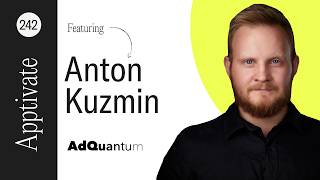 | ▶ YouTube · 35 min Apptivate (Remerge) |
Key takeaway: Meta’s Andromeda algorithm has shifted the primary signal for ad targeting from manual audience settings to the creative assets themselves.
• The Andromeda algorithm uses a three-stage process—Retrieval, Ranking, and Auction—to evaluate an ad's visual parameters, sound, and unique selling proposition before it even enters the auction.
• Meta now uses a Creative Similarity benchmark; if new ads are too similar to existing ones in layout, hook, or angle, they are grouped under one Entity ID, which triggers a negative multiplier on CPM and conversion rates.
• Anton Kuzmin, CMO at AdQuantum, notes that 80% of performance results are now tied to creative assets rather than campaign structure or narrow interest targeting.
• A recommended ad set structure involves 10 to 20 unique creatives using Advantage+ broad targeting, as manual interest settings are becoming ineffective for most app categories.
• Skip intra-day checks and wait up to four days for stable data; if a creative cannot maintain a $500 daily spend at the target CPA, it is unlikely to improve.
• The Stock Strategy suggests pausing successful creative angles for a few months to let the auction cool down before relaunching them to avoid audience fatigue and algorithm penalties.
• While AI tools can multiply variations, Kuzmin finds that a mix of 80% AI-enhanced assets and 20% pure UGC featuring real people remains the most effective balance.
Why it matters: For founders running lean teams, this confirms that hacking audience interests is dead; the work has moved entirely to producing high-volume, visually distinct creative that the algorithm can use to find your buyers.
Worth it: Yes, because it explains the specific mechanism behind why duplicating successful ads no longer scales on Meta.
themobiletakeaway.com
| • | Apple Ads and AppLovin lead iOS acquisition in new index AppsFlyer Blog AppsFlyer’s 2026 index ranks Apple Ads and AppLovin top on iOS and Google Ads on Android, and measures quality by ad spend growth, not retention. |

The next issue, in your inbox.
Apple and Google updates, pricing and paywalls, and the numbers behind app businesses. Get the brief every weekday morning.
Free. Every weekday. Unsubscribe anytime.