Apple's new age rating deadline · How $1 of Meta ads made $4
|
The Mobile Takeaway
For people who ship apps
|
Tuesday, November 3, 2026
|
Apple wants every app to declare shared-location and dating features by January 12, with dating features rated 18+, while Google is opening up native file sharing with a new cross-platform SDK.
A solo developer turned a one-dollar ad spend into four dollars of revenue using a raw screen recording, and Jake Shimota grew to $30,000 in monthly revenue partly by doubling his monthly price.
Platform
| • | Apple sets January 12 deadline for new age rating declarations Apple Developer News From November 16, declare shared-location and dating features in App Store Connect. Every app needs this by January 12, 2027; dating features mean 18+. |
| • | Apple reports $114.5 billion in Q4 revenue, up 12% 9to5Mac Apple posted $114.5 billion in fiscal fourth-quarter revenue, up 12% year over year, and $30.71 billion in net profit. |
| • | Supreme Court sets January 11 hearing in Apple's Epic appeal 9to5Mac Arguments are set for January 11, 2027. The court will review only the contempt ruling over Apple's link rules, not what Apple can charge on outside purchases. |
| • | Google to launch Quick Share SDK for Android and iOS apps 9to5Google A new SDK announced at Android Dev Summit will let developers integrate native peer-to-peer file sharing directly into their apps starting next year. |
Monetization
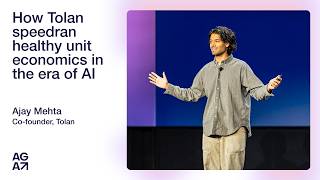 | ▶ YouTube · 26 min RevenueCat (YouTube) |
Key takeaway: Tolan reached healthy unit economics by shifting from high-engagement Gen Z users to better-converting women in their 30s and 40s, and by pricing for the real cost of AI inference.
• It moved from a hard paywall to freemium after 1- and 2-star reviews from users who felt paywalled. Co-founder Ajay Mehta notes even top apps convert about 10.9% within 35 days, leaving ~90% locked out.
• "Model routing" sends routine chat to smaller, cheaper models and saves frontier models for "moments that matter."
• Women in their 30s and 40s carry the "mental load" of family and jobs and will pay for practical support.
• Paywall headlines are personalized from the onboarding chat, for example around exam stress.
• A three-tier "price ladder": Lite at $12/month, Plus at $25/month and Unlimited at $200/month for heavy users like long-haul truck drivers.
• Monthly plans are favored over annual for a clearer "product signal" and fewer trial billing failures.
• One-off "top-ups" buy extra chat time, and ads are being tested for users who will never pay.
Why it matters: In AI apps every user costs real money in tokens, so pricing tiers must track usage and the audience must value the product enough to cover inference.
Worth it: Yes, a rare detailed look at the unit economics of an inference-heavy consumer app.
themobiletakeaway.com
| • | Reddit shifts to app installs as search referrals drop Mobile Dev Memo Reddit is transitioning to a logged-in model and shifting marketing spend toward app install campaigns to counter declining US user growth caused by Google’s AI Overviews hitting search traffic. |
Building
| • | How Lovable's brand studio runs a $50K, two-week sprint Sneak Peek (YouTube) Nick Pattison of Primary Studio, which designed Lovable's brand, charges "50,000 flat" for a brand sprint of "10 business days total". He shows two opinionated mood-board directions on day three and gets sign-off live on the call. His takeaway for founders: AI makes "good enough" work easy, but "concept will always win." |
Business
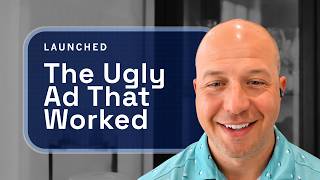 | ▶ YouTube · 7 min Launched by RevenueCat |
Key takeaway: A solo golf-app developer told host Charlie Chapman how a raw, last-minute screen recording earned a 4x return on Meta ads by filtering for high-intent users instead of chasing broad reach.
• The ad was a "haphazard, very raw screen recording voiceover" made at the last second, not polished influencer content.
• At $300 a day with the goal set to "Installs," cost per install settled at about $0.80 within a couple of days.
• RevenueCat showed a 30-day LTV of about $4.00: "Spend a dollar, make four dollars."
• He knew the LTV from organic conversions before paying for traffic.
• Showing the real app screens filtered for golfers who want "Moneyball"-style analytics. He calls the app a "slightly better mousetrap."
• Chapman's counter-example: a Coco Notes ad drove lots of downloads and trial starts, but trial-to-paid "completely flatlined."
• The developer credits "dumb luck and desperation," plus "empathy and intuition" for users like himself.
Why it matters: Creative that shows the actual product can filter for paying users better than expensive production.
Worth it: Yes, a concrete way for solo founders to test paid acquisition without an agency or a big budget.
themobiletakeaway.com
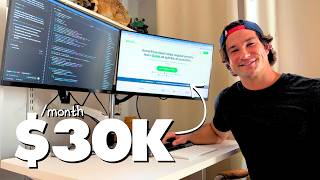 | ▶ YouTube · 13 min Starter Story |
Key takeaway: Jake Shimota grew ExcelExercises.com to $30,000-$35,000 in monthly revenue by swapping video tutorials for interactive simulations and fixing his subscription pricing.
• About 50,000 monthly visitors and 2,500 paying subscribers, on plain JavaScript and roughly $100 a month of Google Cloud hosting.
• Early SEO came from a counterintuitive 1,500-2,000-word landing page that drew high-intent search traffic.
• He pays $100 a month for Claude to help write code.
• Monthly subscribers had a four-to-five-month payback period, so they were barely profitable.
• He doubled the monthly price to $19.99 and kept annual at $59.99, which sped up growth and improved his margins on ads.
• Streak and high-score leaderboards keep job seekers and career changers engaged.
• Corporate and university bulk deals came after users recommended it to their managers.
Why it matters: A boring utility can earn high margins by fixing one friction point in traditional learning and putting a hard paywall after a free sample.
Worth it: Yes, for the tactic of doubling the monthly price to fix LTV.
themobiletakeaway.com

The next issue, in your inbox.
Apple and Google updates, pricing and paywalls, and the numbers behind app businesses. Get the brief every weekday morning.
Free. Every weekday. Unsubscribe anytime.