100,000 apps for iPhone Duo · Discord's faster Rust Android app
|
The Mobile Takeaway
For people who ship apps
|
Monday, November 9, 2026
|
Apple says well over 100,000 apps are already built for iPhone Duo, and Discord previewed a Rust-based Android client that launches in under a second on low-end phones.
One solo founder reached $1 million in revenue by shipping 30+ single-feature micro-apps into ecosystems like the Google Workspace Marketplace.
Platform
| • | Apple says 100,000 apps already support the new iPhone Duo 9to5Mac Apple told 9to5Mac thousands more Duo apps arrive each day, two weeks after the phone's launch. |
| • | Apple could make Siri 'more like an agent' next year 9to5Mac Mark Gurman says Apple could make Siri "more like an agent" as early as next year and is giving engineers more time to code. |
| • | Discord previews a much faster Rust-built Android app 9to5Google Discord's CTO showed a Rust-based Android client launching in under a second on low-end phones. No release date yet. |
| • | Apple saves $2.7 billion by routing $50 billion through Singapore AppleInsider Financial Times reports Apple utilized Singaporean tax incentives to shield $50 billion in profits, yielding significantly higher tax savings than the company’s traditional Irish structures. |
Business
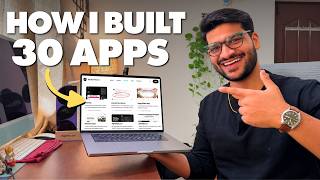 | ▶ YouTube · 17 min Starter Story |
Key takeaway: Sanskar Tiwari reached $1 million in total revenue as a solo founder by shipping over 30 single-feature micro-apps on established platforms like the Google Workspace Marketplace.
• Tiwari manages eight active products generating roughly $12,313 in monthly recurring revenue, including tools like MagicSlides and AskVideo.
• He validates new ideas by placing a Buy button on a five-minute landing page before coding; the build only begins once the first sale is confirmed.
• The strategy relies on building for existing ecosystems like Chrome or Google Workspace to leverage their built-in trust and distribution infrastructure.
• He avoids feature creep by ensuring each app solves exactly one problem, arguing that customers lose interest when a tool tries to do too many things.
• His marketing involves creating a separate YouTube channel for every product to keep the algorithm focused on specific audiences like teachers or office workers.
• He warns against solving problems for people who do not have money, such as students, and instead targets niches with a proven ability to pay.
• To ship quickly, he uses Next.js, Supabase, and Claude, which costs him about $200 a month.
• Early cash flow came from AppSumo lifetime deals, which generated over $85,000 and provided an immediate user base for feedback.
Why it matters: This portfolio approach allows solo founders to diversify their risk and use platform-native search to find customers without a massive advertising budget.
Worth it: Yes, because it offers a concrete blueprint for validating demand and scaling small utilities without the overhead of a traditional startup.
themobiletakeaway.com
 | ▶ YouTube · 11 min Adam Lyttle |
Key takeaway: App founders should view their technical skills as transferable assets to physical businesses or consulting, rather than relying on digital diversification like Google Play or SaaS which face the same AI-driven saturation.
• Apple's termination of developer Araz under section 3.2(f) highlights the "sudden death" risk where an entire income stream can vanish in less than 22 days.
• The rise of "personal software" via AI prompts allows users to build exactly what they need instead of downloading apps, creating a "slow death" for traditional app categories.
• The traditional safety net of returning to a dev job is weakening, with over 5,000 tech layoffs in October alone across companies like Netflix and Amazon.
• Adam Lyttle fell over $200,000 into debt when clients swapped his $200/hour web development for $20/month Squarespace.
• Lyttle recovered by applying SEO and Facebook ad skills to a local lawn mowing business, proving high-tech tactics work in low-tech industries.
• Digital diversification into Chrome extensions or Google Play is often a "bad plan" because those markets face the same AI-generated junk and platform crackdowns.
• Building a personal brand or offering AI consulting to non-tech businesses creates a moat that AI cannot easily replicate.
Why it matters: Understanding that your value lies in your ability to solve business problems with technology, not just in maintaining a specific app on a specific store, provides the psychological safety needed to take risks.
Worth it: Yes, because it reframes the existential dread of platform dependency into a concrete list of transferable skills and alternative revenue paths.
themobiletakeaway.com
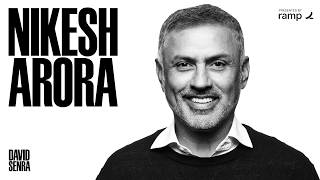 | ▶ YouTube · 63 min David Senra |
Key takeaway: Nikesh Arora grew Palo Alto Networks by targeting a 40% operating margin through a strategy of selling multiple "adjacent" products to existing customers to dilute high acquisition costs.
• Arora targets a 40% operating margin by reducing the typical 60% spend on sales and marketing through selling a "truckload" of products to every acquired customer.
• He refuses to sign a definitive term sheet until the target founder and his own product team spend 30 days designing a joint roadmap, ensuring alignment before any money changes hands.
• To maintain momentum after an acquisition, Arora puts the acquired founder in charge of their entire product category across the company rather than under an internal manager.
• The company only acquires startups ranked #1 or #2 in their niche, observing that third-place players in enterprise tech almost never generate profit.
• Arora mandates that founders re-vest their equity over three to four years to ensure the vision survives the transition and critical product development cycles.
• He predicts AI will collapse traditional corporate silos, enabling a single developer to handle coding, testing, and UI by using AI agents for 90% of the manual work.
• Palo Alto Networks uses AI for "virtual patching," blocking vulnerabilities at the network perimeter before a customer even has time to update their software manually.
• Arora writes his own social media posts from the back of a car, noting that followers immediately spotted the difference when he tried using Claude for grammatical edits.
Why it matters: These tactics provide a framework for app founders to scale beyond a single product by focusing on unit economics and rigorous team integration.
Worth it: Yes, because the 30-day pre-signing roadmap is a practical filter for any founder considering a merger or a major partnership.
themobiletakeaway.com

The next issue, in your inbox.
Apple and Google updates, pricing and paywalls, and the numbers behind app businesses. Get the brief every weekday morning.
Free. Every weekday. Unsubscribe anytime.