AppsFlyer tracks ChatGPT installs · Amazon gates product catalogs
|
The Mobile Takeaway
For people who ship apps
|
Tuesday, November 10, 2026
|
AppsFlyer now attributes app installs to ChatGPT recommendations, moving those users out of generic direct traffic buckets.
This identifies organic growth while Amazon and Walmart begin gatekeeping product catalogs behind their own native AI agents. Apple Ads and AppLovin now lead mobile performance rankings as high-margin AI moats shift from software wrappers to physical automation.
Monetization
| • | Retail platforms use native AI agents to gatekeep third-party tools Mobile Dev Memo Amazon and Walmart are positioning native AI agents as gatekeepers, forcing third-party tools toward advertising-based monetization by restricting direct access to product catalogs. |
| • | AppsFlyer launches attribution for organic and paid AI chatbot traffic AppsFlyer Blog AppsFlyer now attributes app installs to ChatGPT recommendations, moving these users out of the generic direct traffic bucket to help founders measure organic AI growth. |
| • | AppLovin and Apple Ads top AppsFlyer’s 2026 mobile performance rankings AppsFlyer Blog The index scores quality by ad spend growth instead of retention, ranking AppLovin first for iOS gaming and Apple Ads for iOS non-gaming. |
Business
 | ▶ YouTube · 38 min My First Million |
Key takeaway: AI's biggest financial upside is shifting from digital tools to physical industries like drug discovery, housing, and defense where efficiency gains are massive.
• Anthropic’s seven co-founders have collectively generated roughly $96 million in net worth every day since the company’s inception 2,500 days ago.
• Traditional drug development costs $2 billion and takes 10 years with an 80-90% failure rate; AI is now being used by individuals and firms like Isomorphic Labs to sequence tumors and find matches in a fraction of that time.
• Zuru Tech has invested $1 billion to build automated factories that "print" high-end homes, aiming to reduce construction costs that currently sit at $600-$800 per square foot in premium markets.
• The "World of Bits" (SaaS and digital content) is becoming a race to the bottom with diminishing returns, while "World of Things" applications like autonomous forklifts, window cleaners, and bridge maintenance offer higher moats.
• In agriculture, specialty crops like the Honeycrisp apple took 20 years to develop, but companies like Nitroduck are using AI and CRISPR to modify flavor and disease resistance on much faster timelines.
• Modern warfare is pivoting toward high volumes of "cheap pieces of junk metal" (autonomous drones) capable of destroying traditional, high-cost military hardware.
• Shaan Puri suggests an "Investor Mindset": prioritize being in the right "body of water" over being the "best sailor" in a dying or overcrowded market.
Why it matters: For app founders, the next wave of high-margin opportunities lies in building the software layer for physical automation and specialized hardware rather than generic AI wrappers.
Worth it: Yes, because it provides a framework for identifying high-value niches outside of the saturated LLM and coding agent markets.
themobiletakeaway.com
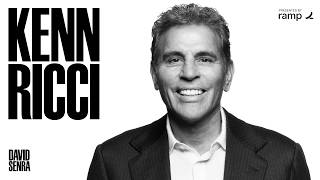 | ▶ YouTube · 71 min David Senra |
Key takeaway: Kenn Ricci scaled a $500 out-of-pocket investment into a $4 billion private jet empire by using a pre-owned aircraft counter-strategy against NetJets and implementing radical employee empowerment.
• In 1980, Ricci acquired a failing charter company for $27,500 using the company’s own $27,000 cash reserves and just $500 of his own money.
• To compete with market leader NetJets, Ricci launched Flight Options using pre-owned aircraft at 50% of the cost of new planes while maintaining identical safety and service standards.
• He views mergers as a sign of weakness, arguing that integrating cultures is nearly impossible if the incoming workforce exceeds 10% of the original company.
• Flexjet employees have total authority to resolve customer issues immediately; an $80,000-a-year staffer can "comp" a $300,000 trip without seeking supervisor approval to fix a service breakdown.
• After being forced out of his company in 2002, Ricci bought it back in 2008 for $42 million—a fraction of its previous value—after the new owners lost $600 million.
• To manage family wealth, Ricci uses a 60/20/20 rule: the sibling who finds an investment takes 60%, and the other two are offered 20% each to eliminate jealousy over performance.
• He maintains that "money comes naturally as a result of service," focusing on the number of people whose lives are improved rather than the balance sheet alone.
Why it matters: For founders, Ricci’s career provides a blueprint for competing with better-funded incumbents through cost-structure innovation and scaling high-end service through extreme decentralization.
Worth it: Yes, because the "no-approval" customer service tactic and the 60/20/20 investment framework are rare, actionable insights for long-term builders.
themobiletakeaway.com
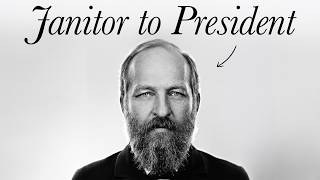 | ▶ YouTube · 38 min Founders Podcast |
Key takeaway: James Garfield rose from a fatherless log cabin to the presidency through intellectual merit and a passionate love of learning, only to die from preventable infection because his doctors rejected modern medical science.
• Garfield paid for his first year of college by working as a janitor and was promoted to assistant professor in just one year, eventually becoming a college president at age 26.
• While serving in Congress, he authored an original mathematical proof that was published in the New England Journal of Education.
• During the Civil War, he won the Kentucky campaign by dividing his small, outgunned regiment into three groups to create the illusion of a massive force, tricking the Confederate army into a retreat.
• He was drafted for the presidency against his will after giving a speech for another candidate; he called the office a "bleak mountain" that would ruin his character and quiet life.
• The assassin’s bullet was not fatal, as it missed his vital organs and was naturally encapsulated by fibrous tissue.
• American doctors killed him by repeatedly probing the wound with unsterilized fingers and metal tools, having dismissed Joseph Lister’s germ theory as "absurd."
• Garfield survived for 79 days after the shooting before succumbing to the infections introduced by his medical team.
Why it matters: Garfield’s life shows how intellectual curiosity can drive an improbable career, while his death is a reminder that ignoring technical shifts can be fatal to any enterprise.
Worth it: Yes, for the "ragged boy" philosophy and the military tactic of using perceived scale to overcome a lack of resources.
themobiletakeaway.com

The next issue, in your inbox.
Apple and Google updates, pricing and paywalls, and the numbers behind app businesses. Get the brief every weekday morning.
Free. Every weekday. Unsubscribe anytime.